

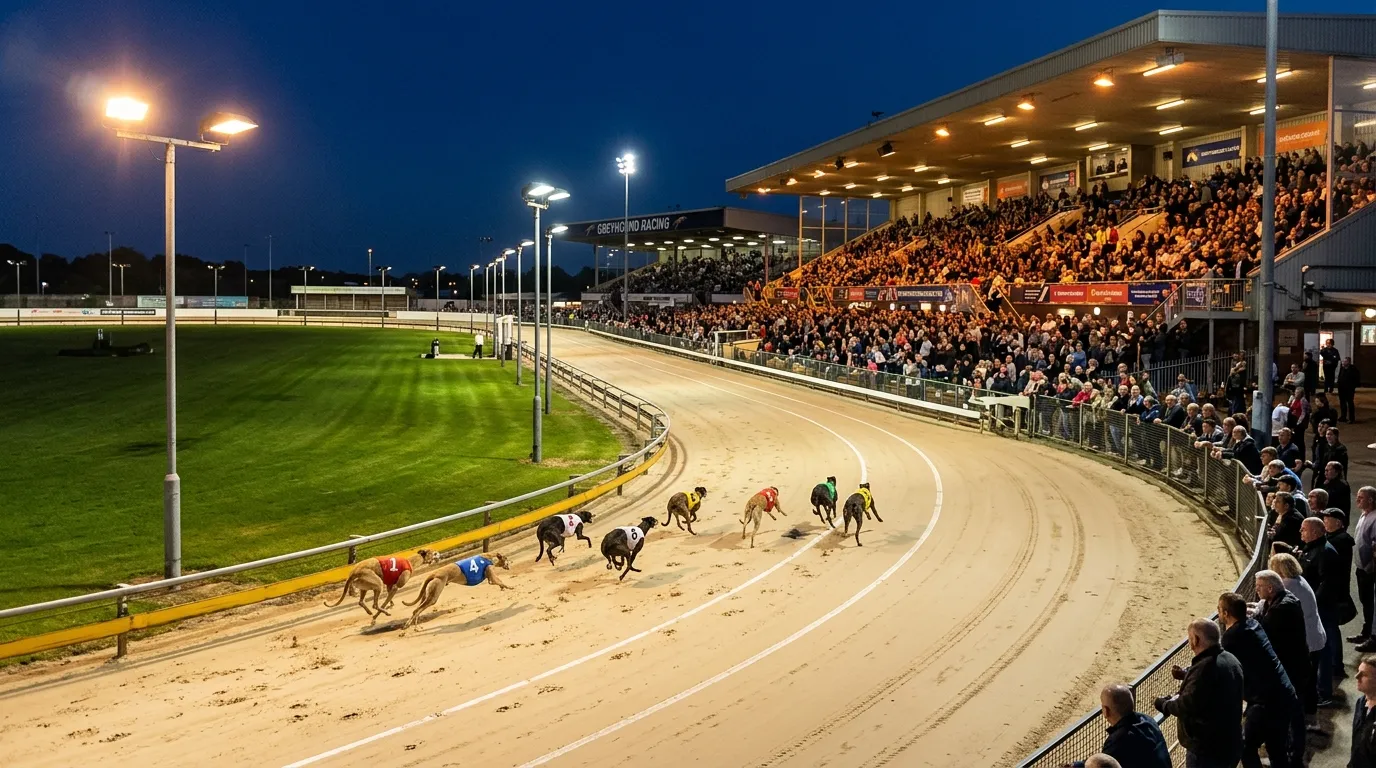
Romford greyhound results matter more in 2026 than they did a decade ago, and the reason is straightforward: this is now London's only licensed greyhound stadium. Since Crayford closed its gates in January 2025, every bettor, enthusiast, and curious newcomer looking for dog racing in the capital ends up at the same 350-metre circuit in Essex. That concentration of attention has made Romford's race data essential reading for anyone with skin in the game.
Accurate results are the foundation of informed betting. They tell you which dogs are improving, which trainers are finding form, and which trap positions are delivering on specific nights. Historical depth allows pattern recognition; live updates let you act on the moment. Neither is sufficient alone. A bettor relying purely on instinct will eventually meet someone who tracked the last fifty 400-metre races and noticed that Trap 1 winners tend to cluster on drier evenings. That edge, small as it seems, compounds.
This guide operates on a simple premise: data without context is noise, and context without data is speculation. We provide both. The sections ahead cover Romford's track specifications in detail, including the post-2019 renovation changes that reset the record books. You will find practical breakdowns of form guides and sectional times, trap statistics specific to this circuit, and a clear explanation of how the grading system shapes every race card. Beyond the technical, we examine the welfare standards governing the sport and the broader industry currents affecting its future. London's last greyhound stadium deserves a resource that matches its significance. This is it.
What You'll Find in This Guide
- Romford is now London's only licensed greyhound stadium following Crayford's January 2025 closure, making its results essential for any bettor in the capital region.
- The track's 350-metre circuit features a 67-metre run to the first bend, with Trap 1 showing win rates of 18-19% against a theoretical 16.6% baseline.
- Current track records were set after the £10 million 2019 renovation; New Destiny holds the 575m record at 34.53 seconds from June 2024.
- GBGB 2024 data shows a 1.07% injury rate and 94% successful retirement rate, with economic euthanasia cases dropping 98% since 2018.
- The industry enters its centenary year with 18 licensed UK tracks, £794 million annual betting turnover, and Wales set to become the first nation to ban greyhound racing between 2027 and 2030.
London's Last Standing Dog Track
Romford Greyhound Stadium holds a distinction no track manager would have wanted but now must embrace: it is the sole surviving GBGB-licensed venue in Greater London. The closure of Crayford Stadium in January 2025 funnelled all metropolitan greyhound racing into this single site, transforming Romford from one option among several into the only option for London-based bettors and racegoers. That shift carries weight. According to the stadium's official history, the venue first opened on 21 June 1929, moved to its current London Road location in 1931, and has operated continuously through nearly a century of industry change. It won Racecourse of the Year in 1998 and 2003, a recognition of track quality that few venues can claim twice.
The modern iteration of Romford emerged from a comprehensive renovation completed on 6 September 2019, a project that cost approximately £10 million and reshaped the facility from the ground up. That investment brought new grandstands, improved hospitality areas, and crucially, track surface improvements that changed racing characteristics. Any results data from before September 2019 must be treated with caution: the track today is not the track of five years ago. Lap times, trap biases, and sectional benchmarks all reset after the renovation, which is why serious form students focus on post-2019 records exclusively.
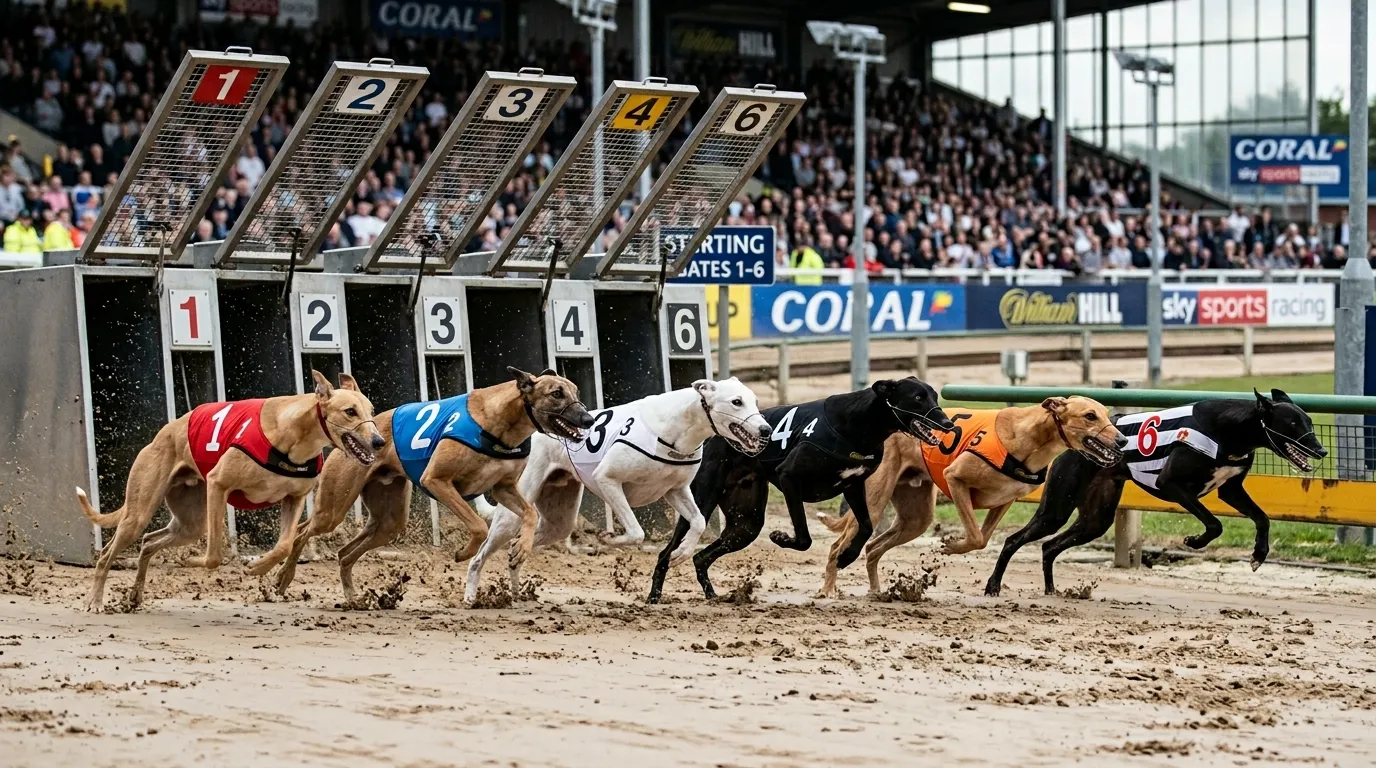
The circuit itself measures 350 metres in circumference, a dimension that places it among the medium-sized British tracks. Romford uses an Outside Swaffham mechanical lure, running on the outer rail. This lure type affects racing dynamics: dogs break toward the outside from their traps, and the geometry of the first bend rewards those who can establish position early. The run to the first bend measures 67 metres for the standard 400-metre and 575-metre distances, a length that favours early pace dogs but still allows room for tactical runners to recover.
Capacity at the renovated stadium exceeds 1,700 spectators across various viewing and dining areas, though some sources cite higher figures depending on event configuration. The venue operates weekly fixtures throughout the year, with BAGS (Bookmakers' Afternoon Greyhound Service) coverage ensuring that most meetings are available for off-track betting. This consistent scheduling means bettors can plan their engagement around predictable race nights rather than sporadic events. Romford typically hosts evening meetings on specific weekdays and occasional afternoon BAGS fixtures, though exact days should be confirmed through official channels as seasonal adjustments occur.
The stadium's survival when others closed reflects several factors: location within reach of a large population, the renovation investment that modernised facilities, and commercial relationships with betting operators who need quality content. Greyhound racing in Britain has contracted from 77 historically licensed tracks to just 18 operating under GBGB in 2025, a decline that makes each remaining venue more significant. Romford's position as London's last dog track means it carries the sport's metropolitan presence entirely on its own circuit.
Racing Distances and Track Records
Romford offers five racing distances: 225, 400, 575, 750, and 925 metres. Each distance tests different attributes. The 225-metre dash is pure early pace, a trap-to-line sprint where the first three strides matter enormously. The 400 metres is the standard distance, the benchmark against which most greyhounds are measured, requiring a balance of acceleration and sustained speed. At 575 metres, stamina begins to factor in, rewarding dogs that can maintain their pace around the second bend. The 750 and 925 metre trips are true staying events, relatively rare in the fixture list but crucial for identifying dogs with genuine endurance.
Understanding these distances requires grasping the track's geometry. The run from the traps to the first bend is 67 metres for both the 400-metre and 575-metre distances. This measurement matters because it determines how much time dogs have to find their running position before the pack compresses into the turn. A longer run-up generally favours wide runners and dogs with strong early pace, while shorter runs can bunch the field and create trouble. Romford's 67-metre figure sits in the middle range among British tracks, neither exceptionally long nor cramped.
The official track records reflect performances since the 2019 renovation and represent the times to beat on the current surface:
| Distance | Record Holder | Time | Date |
|---|---|---|---|
| 225m | Chopchop Rainbow | 13.17 | 28/10/2022 |
| 400m | Roxholme Nidge / Magical Luka | 23.26 | 15/09/2017 & 05/09/2025 |
| 400m Hurdles | Glenwood Dream | 23.99 | 23/04/2010 |
| 575m | New Destiny | 34.53 | 14/06/2024 |
| 750m | Avit On Bertha | 46.37 | 12/12/2012 |
| 925m | Riverside Honey | 58.57 | 06/09/2019 |
The 400-metre record is notable for being shared by two dogs, with Magical Luka equalling the mark set by Roxholme Nidge. Such parity at the top suggests the record represents something close to optimal performance on this track configuration. New Destiny's 575-metre record from June 2024 indicates that the middle distance standard continues to evolve even years after the renovation, a reminder that records remain vulnerable when the right dog meets the right conditions.
For bettors, these records serve as calibration points. A dog running 23.50 over 400 metres is operating within 0.24 seconds of the track record, an elite-level performance. A dog posting 24.10 is competent but far from exceptional. Sectional times provide further granularity, showing whether a dog's overall time came from explosive early pace or a strong finish. When evaluating form, consider not just the final time but how it was achieved. A front-runner who recorded 23.60 while leading throughout is a different proposition from a closer who finished in the same time after recovering from a slow start.
The hurdles record deserves separate mention. Hurdle racing at Romford adds obstacles to the 400-metre trip, testing a different skill set. Glenwood Dream's 23.99 from 2010 remains standing, though hurdle events are scheduled less frequently than flat races. Dogs with proven hurdle form are specialists worth noting when they appear on the card, and spotting them requires knowing how to read the form guide properly.
Reading the Romford Race Card
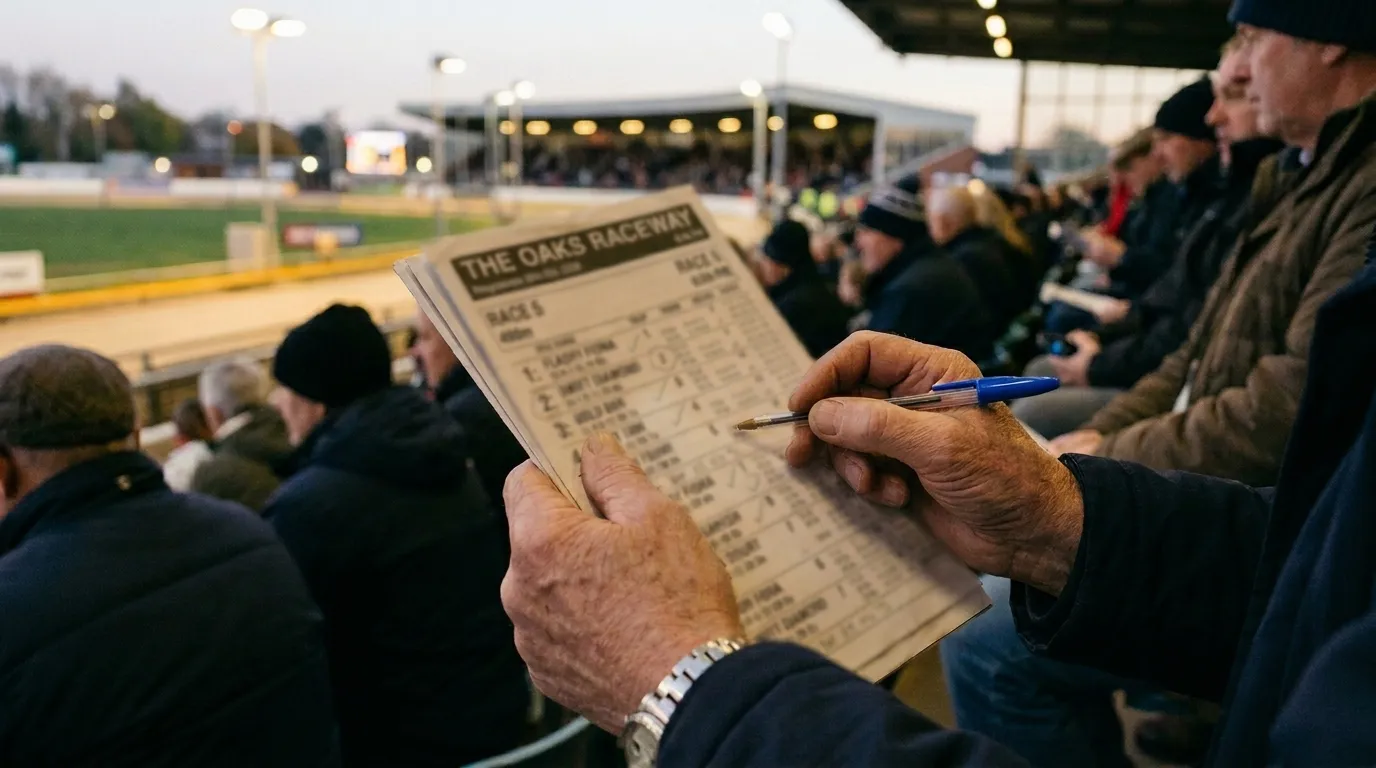
A Romford race card contains dense information packed into a compact format, and decoding it correctly separates casual punters from serious bettors. Each line represents one dog entered in a race, displaying trap number, dog name, trainer, recent form figures, weight, and timing data. Learning to read this information quickly is a foundational skill.
Trap Number and Dog Name
The trap number (1-6) indicates the starting position, with Trap 1 on the inside rail and Trap 6 on the outside. Adjacent to the number sits the dog's name, often revealing lineage through naming conventions. The trap assignment matters enormously for betting: a dog's preferred running style must match its draw. A railer drawn in Trap 6 faces a difficult journey to the fence, while a wide runner in Trap 1 must navigate traffic to reach clear running room.
Trainer Information
The trainer's name appears alongside the dog and carries predictive value that casual observers often overlook. Certain trainers excel at Romford specifically, understanding the track's characteristics and conditioning their dogs accordingly. Over time, you may notice that dogs from particular kennels perform above market expectations at this venue. Tracking trainer strike rates by track is one way to find value.
Form Figures
The recent form figures appear as a sequence of numbers and letters showing finishing positions from previous races, with the most recent result first. A form line of 1-2-3-4-1-2 shows a consistent dog that rarely finishes outside the places. The letters indicate specific circumstances: F for fell, U for unseated, T for trial. Form figures from different tracks should be weighted accordingly. A dog showing 1-1-1 at a smaller track may face stiffer competition at Romford's graded races.
Weight
Dogs carry their natural racing weight, typically displayed in kilograms. Weight changes between runs can signal condition shifts. A dog that has lost weight since its last run might be experiencing issues, while a dog that has gained slightly after a rest could be fresh and ready. Significant weight drops (more than a kilogram) warrant attention and possibly caution.
Sectional Times
This is where form analysis becomes sophisticated. Sectional times break a race into segments, typically showing time to the first bend and time from the first bend to the finish. According to Timeform analysis, a greyhound that leads at the first bend wins approximately 35% of the time. That figure highlights the importance of early pace but also suggests that two-thirds of races are won by dogs who are not leading at that point.
Early pace sections reveal how a dog breaks from the trap. A quick sectional to the first bend indicates a dog that can compete for position, crucial at Romford where the 67-metre run-up allows time for sorting but rewards quick starters. Later sectionals show finishing ability. A dog with a moderate early sectional but a strong closing sectional is a finisher, a type that often offers betting value because the market tends to overvalue front-runners.
Grade and Class
Each race operates at a designated grade level, from top-tier Open races down through A-grade to the lower categories. The grade appears in the race conditions and tells you the competitive level you are assessing. Form achieved in an A4 race carries different weight than form from an M1 race. Dogs moving up in grade face stiffer competition; dogs dropping in class may find easier opportunities.
Practical Interpretation
Reading a form guide effectively means synthesising all these elements. Consider a dog drawn in Trap 2 with recent form of 2-1-1-3, weight stable, sectional times showing strong early pace, trained by a kennel with a good Romford record. This profile suggests a dog likely to contest the lead and capable of winning if it clears the first bend with a clear run. Contrast that with a dog in Trap 5 showing 4-3-2-5, weight up slightly, closing sectionals stronger than early ones, from an unfamiliar trainer. This dog has ability but may need luck in running; it is probably priced longer but offers value if the race unfolds chaotically.
The discipline is in applying this analysis consistently rather than cherry-picking the factors that support your instinct. A form guide tells a story, but only if you read all the chapters.
Trap Statistics and Starting Position Analysis
Trap bias exists at every greyhound track, but the degree and direction vary with circuit geometry, lure position, and surface conditions. At Romford, the Outside Swaffham lure running on the outer rail creates specific dynamics that favour certain starting positions. Understanding these biases helps identify when a draw is working for or against a dog.
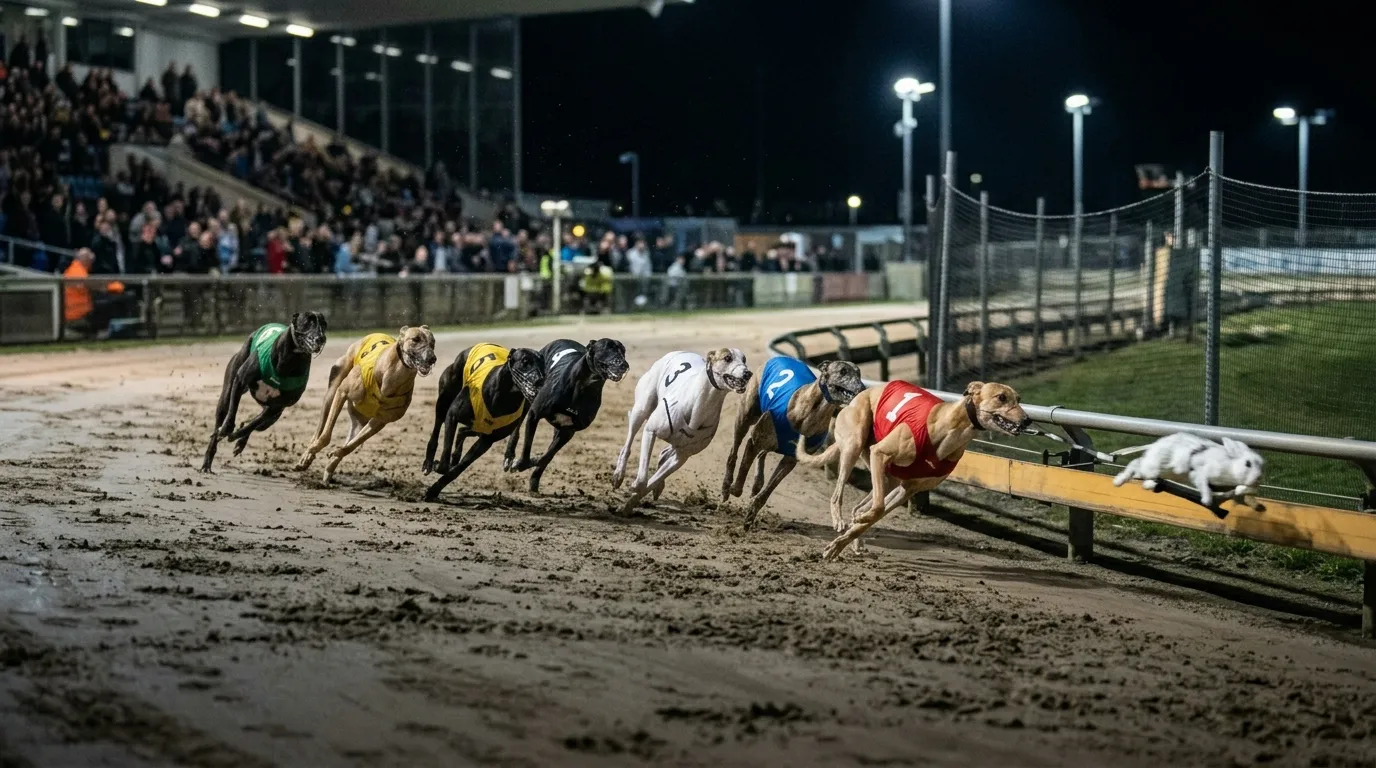
In a perfectly neutral track, each trap would win one-sixth of races, or approximately 16.6%. Real tracks deviate from this theoretical baseline. According to analysis of UK greyhound racing, Trap 1 across British tracks shows a win rate closer to 18-19%, a meaningful edge over the expected probability. The inside position benefits from the shortest route around bends, requiring less ground covered than wider traps. Dogs drawn inside can save lengths simply by racing the shortest distance.
The run-up distance at Romford is the critical factor in interpreting local trap bias. Those 67 metres provide enough space for early pace dogs to establish position but not enough for wholesale reshuffling before the first turn. A dog breaking slowly from Trap 1 will still reach the bend with a positional advantage simply because it has less ground to cover. Conversely, a fast beginner from Trap 6 can cut across if it breaks well, but it must commit early and hope for a clear path.
Inside vs Outside Dynamics
Trap 1 and Trap 2 benefit from the rail. Railings dogs, those who prefer to race on the inside, are ideally suited to these draws. If a dog's form shows it consistently seeking the rail (often noted in race comments as "railed" or "held rail"), it will be comfortable from inside traps but may struggle if drawn wide.
Trap 5 and Trap 6 present different challenges. The Outside Swaffham lure means dogs are initially drawn toward the outside, but the first bend turns left, requiring an angle back toward the inside. Wide draws suit dogs with strong early pace who can get to the front and control the race, or dogs that run wide naturally and can hold their position through turns without losing ground. A dog that lacks early pace and prefers to race midfield will find Trap 6 difficult because it must either fight for position going into the first bend or settle behind the leaders and hope for racing luck later.
Trap 3 and Trap 4 occupy the middle ground, literally. Data from comparable UK tracks suggests Trap 3 often performs well, with win rates around 18% at some venues. The middle traps offer flexibility: a dog can break either way depending on the opposition, avoiding the immediate pressure of the rail and the long journey from Trap 6. For dogs without a strong preference for inside or outside running, middle traps often represent acceptable draws.
Distance-Specific Variations
Trap bias is not uniform across distances. The 225-metre sprint begins closer to the finish, with less time for positions to develop. In these sprints, raw trap speed dominates. The 575-metre distance allows more time for reshuffling, potentially reducing the significance of the initial draw. At 750 and 925 metres, stamina matters more than trap position because the race has enough duration for class and fitness to override starting disadvantage.
The 400-metre standard distance balances these factors. Draw matters, but form matters more. A good dog drawn badly can still win if it possesses sufficient early pace or tactical skill. A moderate dog drawn well might place but will struggle against superior opponents regardless of trap advantage.
Using Trap Statistics in Betting
Trap bias should inform, not dictate, betting decisions. If you identify a dog that suits Trap 1 drawn in Trap 1, showing recent good form and quick sectionals, the draw is an additional positive factor. If the same dog is drawn in Trap 6 on the same form, the price should reflect that disadvantage. When the market prices a well-drawn dog at shorter odds than its form suggests, the trap advantage may already be factored in, and value lies elsewhere. When a dog drawn badly shows form that suggests it can overcome the draw, and the market has overcorrected for the trap, you may find value backing against the raw statistics.
The numbers guide interpretation but do not replace judgment. A 19% win rate from Trap 1 means that 81% of Trap 1 runners do not win. The edge exists but remains probabilistic.
Betting Fundamentals for Romford
Betting on greyhound racing requires understanding the available bet types, the mechanics of odds, and how the market operates at specific venues. Romford races attract betting interest through both on-course totalisator pools and off-course bookmakers, with most volume flowing through the latter. Each bet type serves a different purpose and carries different risk-reward characteristics.
Bet Types Explained
The Win bet is the simplest proposition: select the dog you believe will finish first. If it wins, you collect; if it finishes second or worse, you lose. The Place bet broadens your margin for error, paying out if your selection finishes in the first two (in races of five or six runners) or first three (in larger fields, which are less common in greyhounds). Place odds are lower than win odds because the probability of placing exceeds the probability of winning.
The Each-Way bet combines a win and place bet at half stakes each. If your dog wins, you collect on both the win and place portions. If it places but does not win, you receive the place portion only. Each-way betting suits dogs you believe have a strong chance of being involved but might face one or two runners you cannot separate. The value depends on the place terms offered, typically one-quarter or one-fifth of the win odds.
Forecast bets require you to predict the first two finishers in correct order. A straight forecast specifies Dog A first, Dog B second. A reverse forecast covers both permutations (A first B second, or B first A second) at double the stake. Forecasts pay better than single win bets but are harder to land. Tricast bets extend this to the first three finishers in order, offering substantial payouts for correct predictions but requiring precision across three positions.
Combination bets (forecast combinations covering multiple selections) and accumulators (linking results across multiple races) offer higher potential returns at exponentially lower probabilities. These exotics suit punters with strong opinions across several races, but the edge required to profit long-term is significant.
Starting Price vs Early Odds
The Starting Price (SP) is determined at race time based on the on-course market, while early odds are fixed prices offered by bookmakers before racing begins. Taking early odds locks in a price, protecting you if the dog's odds shorten before the off. SP betting accepts whatever price emerges, which can work in your favour if the dog drifts but against you if it becomes a late favourite.
For sharp bettors, early prices often represent the best value. Bookmakers price up hours before racing, and as information flows (late tips, observed trials, market moves), odds adjust. If you have identified value at an early price, taking it protects that value. Waiting for SP means you share your selection with whatever late money also backs it.
Market Dynamics and Favourite Performance
According to OLBG analysis of 2024 UK greyhound racing, favourites in graded races won approximately 35.67% of the time. This figure carries implications. First, backing every favourite blindly loses money because the odds offered on favourites do not typically return value over that strike rate. Second, favourites win often enough that opposing them indiscriminately also leads to losses. The skill lies in identifying which favourites are correctly priced and which are either undervalued or overbet.
At Romford specifically, market efficiency varies by race type. Higher grade races attract more sophisticated money and tend toward efficient pricing. Lower grade races and early afternoon BAGS fixtures may show more price variation, with local form knowledge carrying greater weight. The principle is consistent: identify when the market has mispriced a runner, either by overlooking form factors or by overreacting to recent results.
Bankroll Management
Betting discipline matters as much as selection skill. Staking plans vary, but the underlying principle is to size bets according to your edge and bankroll rather than chasing losses or overcommitting on supposed certainties. A consistent approach, whether flat staking (the same amount per bet) or proportional staking (adjusting bet size to perceived edge), provides a framework that prevents emotional decision-making. Greyhound racing offers many betting opportunities per meeting, and the temptation to overbet increases with frequency. Setting limits per race and per session is not conservative; it is sustainable.
Understanding the Grading System
Greyhound racing uses a grading structure to match dogs of similar ability, producing competitive races rather than predictable mismatches. The system operates on a progression and relegation basis: winners move up, consistent losers move down. Understanding how grades work is essential for interpreting race cards and identifying betting opportunities.
The grade hierarchy runs from the highest level Open races, which accept any class of dog and attract the best competition, down through letter grades. A-grade races are elite, just below Open level. Below A sit further letter grades (typically A1, A2, down through lower tiers, then potentially M-grades at smaller tracks). The precise naming varies by track, but the principle is consistent: higher grades mean faster dogs and stronger competition.
When a dog wins, it typically moves up in grade, facing tougher opponents in its next race. When a dog finishes consistently behind the places, it drops in grade to find more suitable competition. This movement creates constant reshuffling of form. A dog showing excellent recent form in D4 grade may struggle when promoted to D2, not because its ability has declined but because the opposition has improved. Conversely, a dog dropping from B to C grade may suddenly look dominant against weaker opponents.
Grade Changes and Betting Value
Grade changes are where value often emerges. A dog rising in grade is tested against opposition it has not yet faced at that level. The market tends to price recent form heavily, meaning a dog with three recent wins might be underpriced for its new grade despite lacking class evidence. Backing dogs climbing in grade requires confidence that their form reflects genuine ability rather than beating weak fields.
Dogs dropping in grade present the opposite dynamic. They have failed at a higher level, which suggests limitations, but they may possess ability well above their new opponents. The question is why they dropped. If the drop follows unlucky runs (trouble at the first bend, interference) rather than genuine inability, the dog may offer value when returning to an easier grade. If the drop follows declining times or inconsistent effort, the market's scepticism may be justified.
Open Races and Conditions
Open races ignore the grading structure, inviting all dogs regardless of recent form. These events often headline major meetings and attract the highest quality fields. The Essex Vase and Champion Stakes at Romford are examples of such events, drawing competitors from top kennels. For bettors, Open races require assessing class ceilings, asking whether a dog has proven ability at the highest level or is stepping up into the unknown.
Conditions races specify eligibility criteria beyond standard grades, such as limiting entries to dogs that have not won above a certain level or requiring specific age brackets. These races create defined pools of runners and can produce competitive betting heats with less obvious favourites.
Using the grading system effectively means tracking not just what grade a dog is racing in today but what grade it has recently come from and how it performed there. Form achieved at a higher grade carries more weight than equivalent form at a lower level. A dog that finished fourth in an A2 race may be a solid bet when dropped into an A4.
Welfare Standards and Retirement Programmes
Any serious engagement with greyhound racing requires acknowledging the welfare dimension. The sport involves athletic competition for animals who cannot consent, and this reality shapes regulatory frameworks, public debate, and the long-term viability of the industry. Presenting accurate data from credible sources serves readers better than either glossing over concerns or amplifying criticism without context.
The Greyhound Board of Great Britain (GBGB) publishes annual injury and retirement data, providing the most comprehensive official statistics on welfare outcomes. According to the 2024 data release, there were 3,809 injuries recorded from 355,682 races at GBGB-licensed tracks, an injury rate of 1.07%, the lowest on record since data collection began. This figure includes all reported injuries, from minor to severe.
Track fatalities present a different picture. The same 2024 report documented 123 on-track fatalities, the highest annual total since 2020. This figure represents deaths occurring during or immediately after racing. While the fatality rate per race (0.03%) has halved since 2020, the absolute number of deaths concerns animal welfare advocates who argue that any racing fatality is preventable by ending the activity entirely.
Retirement and Rehoming
Retirement outcomes have improved substantially over recent years. GBGB data indicates that 94% of greyhounds now successfully retire from racing, compared to 88% in 2018. The Greyhound Retirement Scheme (GRS) has distributed over £5.6 million since 2020 to support rehoming efforts, while the Injury Retirement Scheme (IRS) has contributed nearly £1.5 million since December 2018 to cover welfare costs for dogs retiring due to injury.
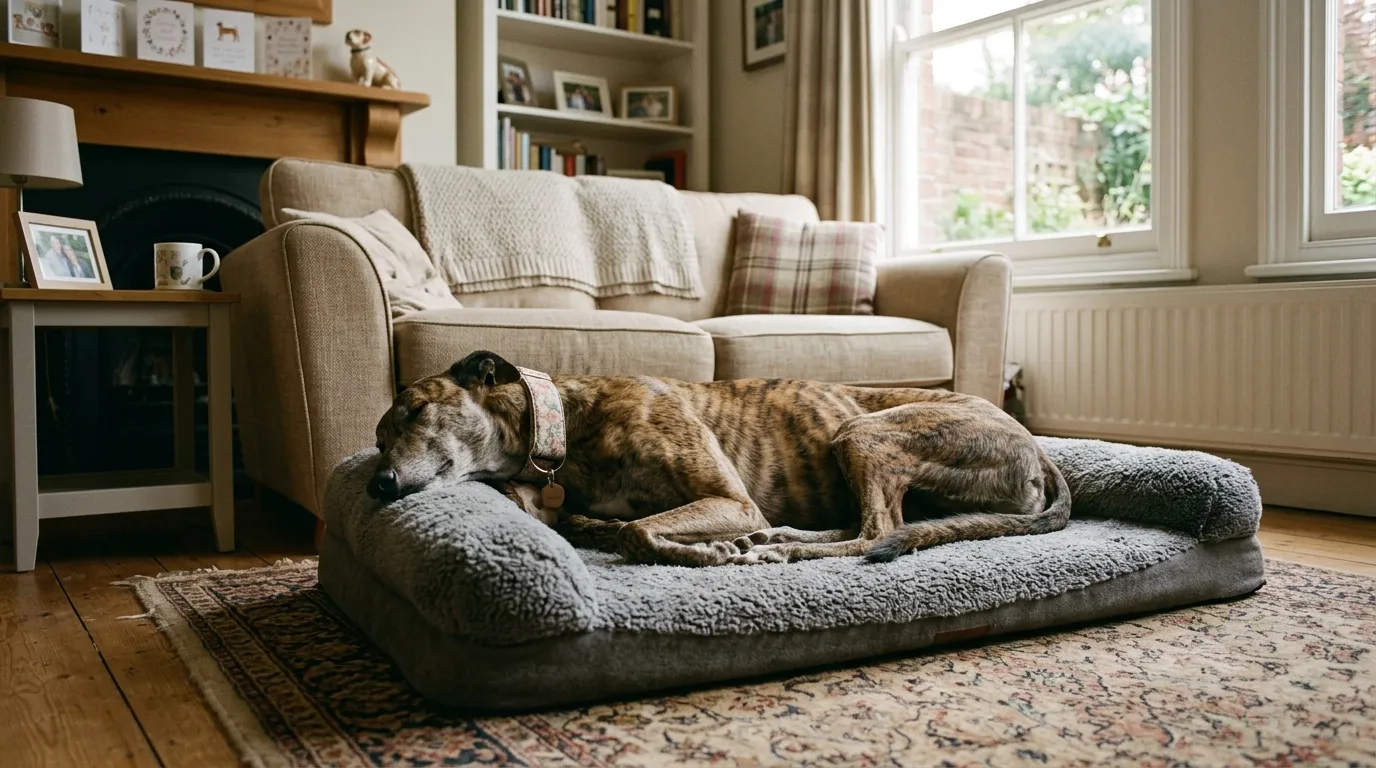
One statistic illustrates the shift in practice: in 2018, 175 greyhounds were euthanised for economic reasons (meaning the cost of treatment or rehoming was deemed prohibitive). In 2024, that figure fell to three. This 98% reduction reflects both regulatory pressure and changing industry culture around what constitutes acceptable treatment of dogs whose racing careers have ended.
Jeremy Cooper, who served as GBGB Chair from 2018 until 2025, brought particular credibility to welfare discussions through his previous role as Chief Executive of the RSPCA. In a GBGB welfare statement, he said: "As a former CEO of the RSPCA, I look at the existing welfare standards in greyhound racing and wish that these were in place for all dog owners in the UK. The standards and values we already have in place leave the law for domestic pet owners far behind." This perspective from someone with animal welfare credentials suggests that licensed racing operates under closer scrutiny than many domestic dog ownership situations, though critics would argue the comparison itself reveals the industry's defensive posture.
Critical Perspectives
Opposition groups present different figures and interpretations. The Cut the Chase Coalition, a grouping of animal welfare organisations, has cited cumulative totals of approximately 4,034 greyhound deaths and over 35,000 injuries since 2017 across GBGB-licensed racing. These aggregate numbers, drawn from GBGB's own data over multiple years, are intended to convey the scale of harm inherent to the sport.
The welfare debate ultimately concerns whether improvements in care, reduced injury rates, and improved retirement outcomes justify continuing an activity that involves inherent risk to animals for human entertainment and gambling. The GBGB position emphasises progress and regulation. Critics argue that the existence of risk, regardless of its reduction, cannot be justified when the alternative (not racing greyhounds) is available.
Track Safety Investment
Romford operates under the same regulatory framework as all GBGB tracks, including requirements for veterinary attendance at every meeting and compliance with The Welfare of Racing Greyhounds Regulations 2010. In 2024, the Track Safety Committee Fund distributed £168,000 in grants for track improvements across GBGB venues, and STRI consultants (Sports Turf Research Institute) conducted 80 visits to licensed tracks to assess surface and safety conditions. The £10 million renovation at Romford in 2019 included track surface upgrades intended to reduce injury risk, though isolating the specific welfare impact of any single investment is difficult.
Bettors engaging with greyhound racing are participating in an industry where these debates are active and outcomes matter. Awareness of the welfare context does not require either endorsing or condemning the sport, but it does require honesty about what the sport involves.
The Industry in 2026
The year 2026 marks a century since organised greyhound racing began in the United Kingdom. The first licensed meeting took place on 24 July 1926 at Belle Vue Stadium in Manchester, introducing a sport that would grow to support 77 tracks across Britain at its peak. Today, the registered sector consists of 18 GBGB-licensed stadiums, approximately 500 trainers, 3,000 kennel staff, 700 officials, 15,000 registered owners, and around 6,000 greyhounds registered annually. The centenary arrives at a moment of both celebration and uncertainty. According to GBGB written evidence to the Welsh Senedd, 15.5% of greyhounds registered in 2024 were from British-bred litters, up from 13.1% in 2021, indicating a gradual shift toward domestic breeding.
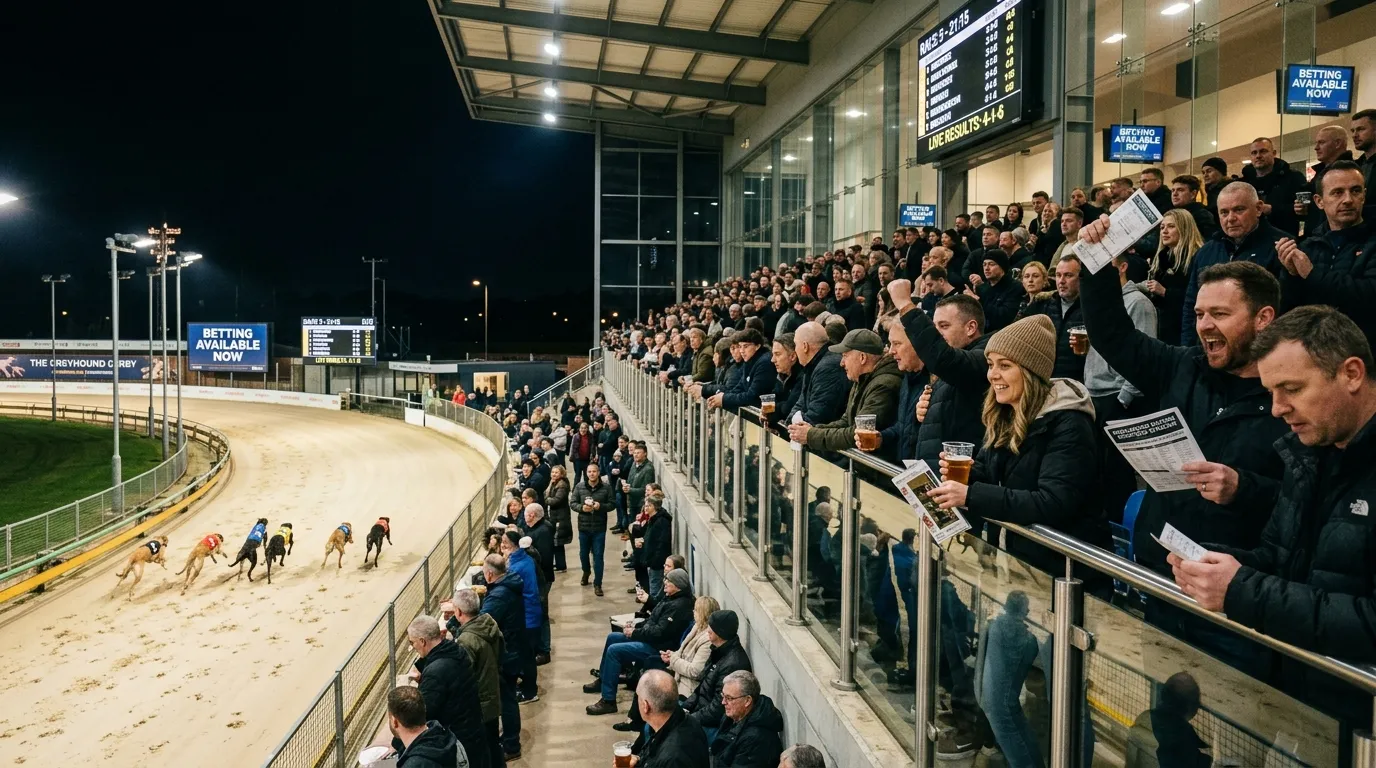
The commercial foundations of British greyhound racing rest heavily on bookmaker interest. According to Gambling Commission data reported via industry sources, betting turnover on greyhound racing in UK bookmakers reached £794 million between April 2023 and March 2024. This figure demonstrates that greyhound racing remains a significant betting product, though it represents a fraction of horse racing's volumes. The British Greyhound Racing Fund (BGRF), which channels bookmaker contributions to the sport, received approximately £6.75 million in the 2024-25 financial year from voluntary payments by betting operators.
Mark Moisley, Commercial Director of GBGB, has been candid about the financial trajectory. In a 2026 industry interview, he stated: "Revenue from bookmakers is declining year-on-year and has done for a number of years." The BGRF itself reported a 4% decline from £7.6 million in 2022-23 to £7.3 million in 2023-24, with projections of around £7 million for 2024-25 amid tighter affordability checks affecting customer betting patterns. Historical peaks saw BGRF income exceed £10-14 million, with one exceptional year reaching over £20 million. The current figures represent a contracted but still substantial funding stream.
Interactive Tool
BGRF Year-on-Year Decline, and Wales Consultation Count
Calculate the exact drop between two consecutive BGRF funding years, and the absolute number of consultation responses behind the "nearly two-thirds" figure.
Percentage Decline
-
-
2023-24
-
2024-25
-
Absolute Drop
-
What this guide states across two separate paragraphs: "£7.3 million in 2023-24" and, further down, "approximately £6.75 million in the 2024-25 financial year." The decline between these consecutive years is never calculated — it's -7.5%, a drop of £0.55 million.
Responses Supporting Ban
-
-
Total Responses
-
Support Fraction
-
Remaining
-
What this guide states as a fraction without the count: "A public consultation received over 1,100 responses, with nearly two-thirds supporting a phased ban." The absolute number is never calculated — it's roughly 733 responses in favour, leaving around 367 that did not support it.
The Wales Prohibition
The most significant regulatory development is the Prohibition of Greyhound Racing (Wales) Bill, which will make Wales the first nation in the United Kingdom to ban the sport outright. According to Senedd Research, the ban will take effect no earlier than 1 April 2027 and no later than 1 April 2030, providing a transition period for the closure of Valley Stadium, Wales's only licensed track. A public consultation received over 1,100 responses, with nearly two-thirds supporting a phased ban.
Huw Irranca-Davies, Deputy First Minister of Wales, stated the government's position: "We have listened to the public, considered the evidence, and are taking decisive action to prioritise animal welfare. The harm from greyhound racing can no longer be justified in a modern, compassionate Wales." The Welsh decision has prompted speculation about whether similar measures could follow in England and Scotland, though government ministers have indicated no current plans to extend prohibition.
Romford's Position
Within this landscape, Romford occupies a peculiar position of strength and fragility. Its status as London's only track creates a natural catchment area covering millions of potential customers. The 2019 renovation positioned the stadium as a modern venue capable of attracting racegoers and maintaining commercial relationships. Yet the same industry contraction that closed Crayford threatens all remaining tracks if bookmaker revenues continue declining or if public sentiment shifts further against the sport.
The centenary year offers an opportunity for the industry to present its case: regulated welfare standards, improved retirement outcomes, entertainment value, and employment. Whether that case persuades sceptical audiences or simply delays further contraction remains to be seen. For bettors, the industry's health matters because the quality and quantity of racing depends on tracks remaining economically viable. Romford's results pages will continue updating only as long as Romford continues racing.
Understanding the broader context helps explain why each meeting matters and why results data carries significance beyond individual bets.
Frequently Asked Questions
What happened to Crayford Stadium and why does it matter for Romford?
Crayford Stadium closed in January 2025, ending licensed greyhound racing at that venue after decades of operation. The closure left Romford as the only GBGB-licensed greyhound track in Greater London, concentrating all metropolitan racing at a single venue. For bettors who previously split attention between the two tracks, this means Romford results now represent the entirety of London's greyhound output. The closure also shifted some trainers and dogs to Romford, potentially affecting form patterns as dogs adapt to a different circuit. Understanding that Romford now carries the full weight of London greyhound racing explains why its fixture list, form data, and race conditions matter more than they did when alternatives existed.
How do the race distances at Romford compare to other UK tracks?
Romford offers five distances: 225, 400, 575, 750, and 925 metres, which covers the standard range found at British tracks. The 400-metre trip is the benchmark distance used across the industry, making Romford's times directly comparable to other venues at that distance. However, the track's 350-metre circumference and 67-metre run to the first bend create specific racing characteristics that differ from larger or smaller circuits. A dog that excels at Romford's 400-metre distance may perform differently at a track with a longer or shorter run-up. When comparing form across venues, focus on relative performance against the opposition rather than absolute times, since track configurations affect timing.
Are racing greyhounds rehomed after their careers end?
According to GBGB data, 94% of greyhounds in the licensed sector now successfully transition to retirement, whether through direct adoption, rehoming organisations, or return to breeders. This represents an improvement from 88% in 2018. The Greyhound Retirement Scheme has distributed over £5.6 million since 2020 to support rehoming efforts, and economic euthanasia (putting dogs down due to cost considerations) has fallen from 175 cases in 2018 to just three in 2024. Multiple charities specialise in placing retired racing greyhounds with families, and the dogs' typically calm temperaments make them suitable pets. Concerns remain among welfare advocates about dogs that pass through unregistered channels or racing outside the GBGB framework, where tracking and welfare standards are less rigorous.
