
Best Greyhound Betting Sites – Bet on Greyhounds in 2026
 Available in US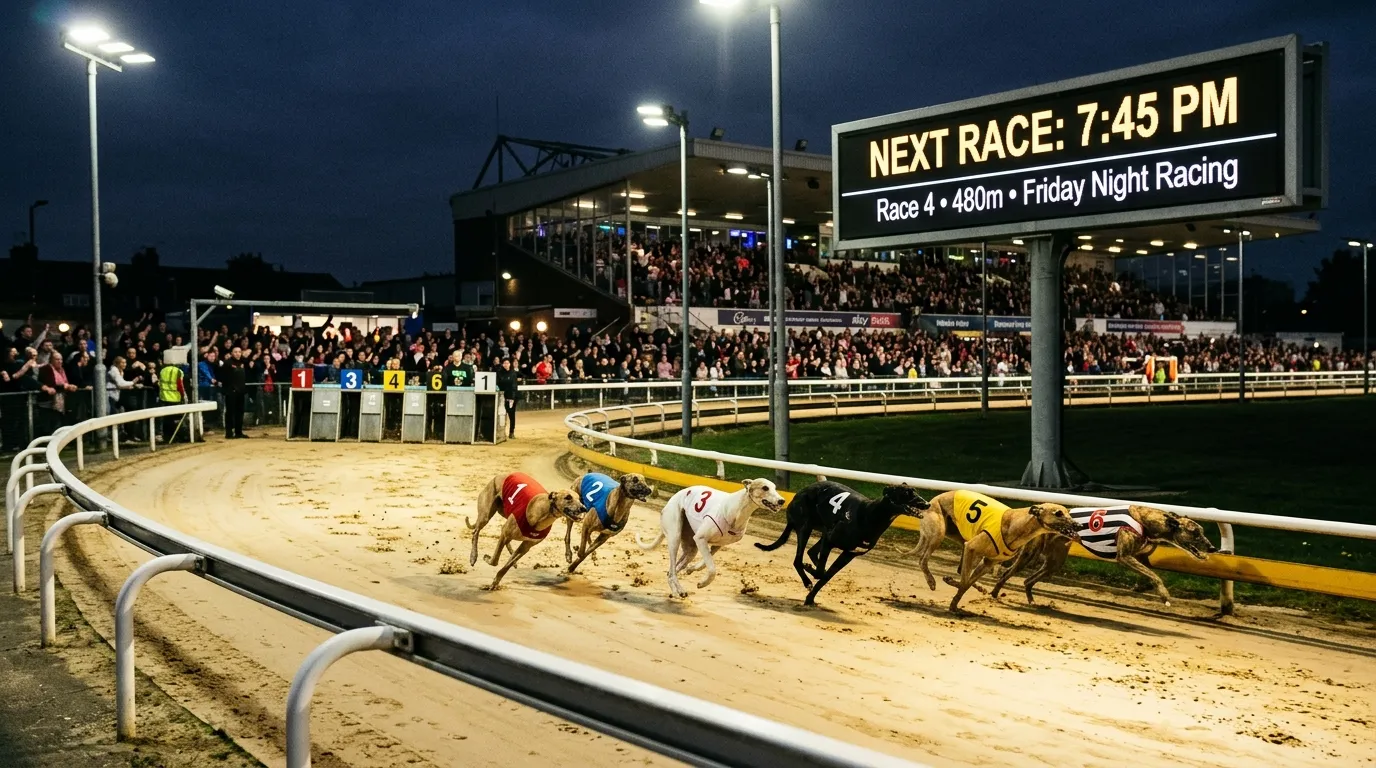
The Romford greyhound race schedule is where smart betting starts. Knowing exactly when races run, which meetings offer the best opportunities, and how the fixture calendar shapes your strategy gives you an edge that casual punters simply do not have. At London’s last remaining licensed greyhound stadium, the rhythm of racing follows a pattern that rewards those who pay attention. Since Crayford closed in January 2025, Romford stands alone as the capital’s only GBGB-regulated venue, making its schedule even more significant for London-based racing enthusiasts.
Romford operates throughout the week with a mix of afternoon BAGS meetings and evening fixtures, each serving different purposes in the racing calendar. Whether you are planning a Saturday night out at the track or building a systematic betting approach across multiple meetings, understanding the schedule is fundamental. The difference between turning up and turning a profit often comes down to preparation, and that preparation begins with knowing when the gates open.
This guide breaks down the weekly fixture pattern, explains the different meeting types, highlights the major competitions worth marking in your calendar, and shows you how to stay ahead of schedule changes. Know before you go, as they say, and you will find yourself making better decisions before the first race even starts.
Weekly Fixtures at Romford
Romford’s weekly schedule follows a consistent pattern that has evolved to serve both the betting market and trackside audiences. The stadium typically hosts between three and five meetings per week, with fixtures spread across both afternoon and evening slots. This regularity is the backbone of any systematic approach to following the track.
Afternoon meetings, which generally start around midday, form part of the BAGS system, the Bookmakers’ Afternoon Greyhound Service that supplies content to betting shops across the UK. These meetings exist primarily for the off-course betting market, running when other sports are quiet and demand for live betting content is high. The atmosphere differs from evening fixtures as there is typically no public admission, though some BAGS meetings are open to spectators.
Evening meetings at Romford usually kick off around 7pm, with the first race time varying slightly depending on the day and fixture type. Friday and Saturday evenings tend to attract the largest crowds, and these meetings often feature stronger graded races. The GBGB, which regulates licensed greyhound racing in Britain, requires all tracks to maintain consistent scheduling to support the betting industry and ensure operational standards are met.
A typical Romford meeting consists of twelve to fourteen races, spaced at intervals of roughly fifteen minutes. This spacing allows time for the dogs to be paraded, for betting markets to form, and for the previous result to be confirmed. The standard race cycle means you can predict with reasonable accuracy when the last race will finish, which is useful for planning your evening or structuring your betting approach across the card.
The BAGS programme accounts for a significant portion of UK greyhound racing activity. In 2024, there were 355,682 races run across GBGB-licensed tracks nationwide, a figure that demonstrates just how much content the industry produces to satisfy the betting market. Romford contributes a substantial share of these races through its regular BAGS fixtures.
One thing worth noting is that race times are not fixed permanently. Fixture lists are published in advance, but specific first race times can shift depending on SIS broadcasting requirements, track conditions, or other operational factors. Checking the confirmed schedule closer to race day is always sensible, particularly if you are planning to attend in person or place early bets.
The weekly rhythm at Romford tends to look something like this: afternoon BAGS meetings on certain weekdays, evening fixtures towards the end of the week, and occasional additional meetings depending on demand. Bank holidays often see adjusted scheduling, with extra fixtures added to capitalise on increased betting activity. The precise days can change month to month, so treating the schedule as a framework rather than a fixed timetable is the right approach.
Meeting Types and What They Mean
Not all Romford meetings are created equal, and understanding the different types helps you calibrate your expectations and betting strategy. The meeting type determines the quality of racing, the competitiveness of the fields, and often the volatility of the betting markets.
Graded meetings form the core of Romford’s programme. In these fixtures, dogs are grouped into races according to their ability grades, from the top-tier A-grade animals down through the letters. The grading system ensures competitive racing, as dogs of similar ability face each other. For bettors, graded meetings offer the most consistent form lines, as you can compare dogs that have been running against similar opposition. The predictability is higher, though margins tend to be slimmer because the dogs are evenly matched.
Open races sit at the top of the quality spectrum. These events attract the best dogs regardless of grade, often carrying enhanced prize money. Open races at Romford draw runners from across the country, meaning form students need to do their homework on dogs they might not have seen before. The quality is higher but so is the uncertainty, as elite dogs meeting for the first time create betting opportunities for those who have done deeper research.
Trials represent another category, though they function differently from competitive racing. A trial is essentially a practice run, allowing trainers to assess a dog’s fitness, speed, or suitability for a particular distance before entering them in proper races. Trial results appear in form guides and can be useful when a dog subsequently enters competition, but they lack the pressure and positioning of race conditions. A fast trial time does not guarantee race success, and experienced form readers know to weight trial performances appropriately.
Puppy and maiden races serve developmental purposes, introducing younger dogs to racing or giving winless dogs opportunities against their own kind. These races can be particularly unpredictable as the dogs involved have shorter form histories and are still developing their racing styles. From a betting perspective, puppy races are where contrarian selections sometimes offer value, as the market has less information to work with.
Romford also hosts sprint and staying races across its five distances, from 225 metres to 925 metres. The sprint events favour early pace and trap draw, while the longer distances reward stamina and the ability to find racing room. The meeting type will influence which distances appear on the card, with open meetings often featuring the most varied distance programme.
Knowing the meeting type before you bet helps set realistic expectations. A weekday BAGS meeting with lower-grade races will produce different betting patterns than a Saturday evening open meeting with prize money attracting quality animals. Neither is necessarily better for punters, but they require different approaches.
Special Events and Major Competitions
The Romford calendar includes several feature competitions that stand above the regular programme, attracting stronger fields, larger crowds, and significantly more betting interest. These events are worth marking well in advance, both for the racing quality and the enhanced betting opportunities they create.
The Essex Vase remains one of Romford’s most prestigious races, a staying event over 575 metres that has produced some memorable finishes over the years. The competition draws entries from leading kennels, and the prize money reflects its status in the racing calendar. Historical winners of the Essex Vase often go on to compete at the highest levels, making it a showcase for emerging talent as much as established stars.
The Champion Stakes is another marquee event, typically contested over the standard 400-metre trip. This distance is Romford’s bread and butter, and the Champion Stakes represents the track’s flagship sprint competition. Fields tend to be highly competitive, with trainers timing their runners’ preparations specifically for this event. For bettors, the Champion Stakes often features well-known form lines, as many runners will have met previously in graded races at the track.
The Golden Sprint adds another layer to Romford’s feature calendar, focusing on the 225-metre dash where raw pace trumps all other considerations. Sprint specialists dominate these events, and trap draw becomes even more crucial over the shorter distance. The Golden Sprint can produce dramatic finishes as margins are often measured in hundredths of seconds.
Beyond these named events, Romford occasionally hosts heats and finals of open competitions that span multiple tracks. These events bring outside dogs to the stadium, creating fresh form puzzles for local followers. The atmosphere at such meetings differs noticeably from regular fixtures, with the crowd and betting activity both elevated.
Sir Philip Davies, the current Chair of GBGB, has spoken about the sport’s place in British culture: “Licensed greyhound racing is a fantastic sport which has held an important place in the fabric of our country for almost a century. The sport has a very bright future ahead.” That sentiment resonates particularly at feature events, where the tradition and excitement of greyhound racing are most visible.
Prize money for these feature events varies but typically exceeds regular graded races by a considerable margin. While exact figures change annually, the investment reflects the importance these competitions hold within the racing calendar. Trainers plan campaigns around them, and the prestige of winning a Romford feature race carries real value in the industry.
From a betting standpoint, feature events require adjusted thinking. The quality is higher, which often tightens the markets, but the increased media coverage and attendance also mean more casual money enters the pools. This can create value on longer-priced selections if the market overreacts to obvious contenders. Conversely, favourites in these races tend to be well-prepared and race-fit, so opposing them purely for the sake of it rarely works.
Annual Scheduling Patterns
The Romford fixture list operates within a broader framework set by industry requirements, seasonal variations, and commercial considerations. Understanding these patterns helps you anticipate scheduling changes before they are officially announced and plan your betting activities across the year.
The racing year at Romford does not follow a neat season in the way football or cricket might. Greyhound racing runs throughout the year, with fixtures continuing through summer months and winter alike. That said, there are discernible patterns. Summer evenings tend to attract larger crowds, and the track may add fixtures to capitalise on this. Winter brings earlier darkness, which affects meeting start times and can influence track conditions, particularly after wet or cold weather.
Bank holidays represent scheduling flashpoints. Easter, the May bank holidays, and the August weekend typically see additional meetings across the UK greyhound circuit, including Romford. These fixtures serve the increased betting demand as more people have time off work. Christmas and New Year bring their own scheduling adjustments, with some tracks closing while others run enhanced programmes.
The broader industry picture shapes what happens at individual tracks. According to GBGB data, there were 355,682 races run across licensed tracks in 2024, a volume that requires careful coordination across venues. Romford’s schedule slots into this national picture, with afternoon and evening meetings timed to avoid direct clashes with other major tracks where possible, ensuring continuous coverage for the betting market.
Fixture publication follows a rolling schedule. The GBGB typically releases confirmed fixtures several weeks in advance, with provisional dates extending further out. For Romford specifically, the track publishes its upcoming programme on its website, and betting operators include confirmed meetings in their scheduling displays. The gap between provisional and confirmed fixtures is where changes most often occur, so checking closer to race day remains important.
Weather plays a role in scheduling reliability that is often underestimated. While Romford’s track can handle most conditions, extreme weather can force postponements. Heavy frost, waterlogged surfaces, or storms may lead to abandoned meetings, with the decision sometimes made at short notice. Replacement fixtures are usually arranged, but they may fall on different days than originally scheduled. Following the track’s official communications is the safest way to avoid turning up to a closed stadium.
Looking at the year as a whole, certain periods tend to produce better quality racing. The months leading up to major competitions often feature heats and qualifiers that attract strong fields. Post-summer, as the nights draw in, trainers begin final preparations for autumn features. Understanding these cycles helps you identify when the best racing opportunities will arise, even if the specific dates vary year to year.
The GBGB website provides official fixture information, though navigating to track-specific data requires some clicking. Third-party sites and betting operators often present the same information in more accessible formats, particularly for those following multiple tracks. Building a habit of checking fixtures weekly keeps you current without requiring excessive effort.
Planning Your Visit
Attending a race meeting at Romford requires more preparation than placing bets from home, but the experience rewards the effort. Getting the practical details right means you can focus on the racing rather than logistics once you arrive.
Confirming the fixture is your first task. While the weekly pattern gives a general indication, checking the specific date and first race time within a few days of your planned visit prevents disappointment. The track’s website and social media channels are the most reliable sources, though betting operators’ fixture lists also provide accurate information. An abandoned meeting is rare but not unknown, so a quick check on the day itself, particularly during winter months, is sensible.
Transport planning depends on your starting point. Romford is accessible by rail, with Romford station served by the Elizabeth line and Greater Anglia services. From central London, the journey takes around thirty minutes. The stadium is a short walk from the station, making public transport a practical option, especially for evening meetings where parking can be busier. If you are driving, the stadium has its own car park, though arriving early on popular nights is advisable.
Evening meetings generally offer the fuller experience. The crowd is larger, the atmosphere more charged, and the restaurant and bar facilities are fully operational. Saturday evenings tend to be busiest, so booking ahead for dining packages makes sense if you want a table. The £10 million renovation completed in 2019 significantly upgraded the facilities, and the current setup comfortably accommodates over 1,700 spectators across its various areas.
Knowing the approximate schedule helps you plan your evening. First race typically goes off around 7pm for evening fixtures, and with twelve to fourteen races running at roughly fifteen-minute intervals, you can expect the final race sometime after 10pm. Arriving half an hour before the first race gives you time to find your bearings, collect a race card, and possibly watch some of the earlier dogs being paraded.
Contingency planning matters because weather cancellations, though infrequent, do happen. Having a backup plan for the evening, or at least not booking non-refundable travel, protects against disappointment. The track generally makes cancellation decisions several hours before the first race if conditions are problematic, so checking for announcements during the afternoon gives you time to adjust.
For those combining a track visit with betting, arriving early also allows time to assess conditions yourself. The state of the track surface, the weather on the night, and watching a few races before committing significant stakes all contribute to better-informed decisions. The race card available at the track provides the same information found online, but there is something to be said for studying form with the buzz of anticipation around you.
Live Coverage and Streaming Schedule
For those following Romford without attending in person, understanding which meetings receive live coverage and where to access it determines how you engage with the racing. Not all fixtures are created equal when it comes to broadcast availability, and knowing the landscape helps you plan your betting and viewing.
SIS, Satellite Information Services, provides the backbone of greyhound racing coverage in the UK. They broadcast meetings to betting shops and supply the footage that many online bookmakers stream to their customers. Romford’s regular fixtures are generally included in the SIS schedule, meaning most licensed bookmakers will offer live video to account holders. Access typically requires a funded account or recent betting activity, though specific terms vary between operators.
BAGS meetings, those afternoon fixtures designed for the off-course market, receive comprehensive coverage as their primary purpose is serving bettors who cannot attend the track. The scheduling of these meetings aligns with betting shop hours and demand patterns, ensuring coverage is available when punters want to bet. Evening meetings also receive broadcast attention, particularly on popular nights when betting volumes are highest.
The quality of streaming has improved considerably over recent years. High-definition coverage, multiple camera angles, and real-time data overlays are now standard at major tracks including Romford. The £10 million renovation included upgrades to the broadcast infrastructure, ensuring the viewing experience for remote audiences matches the improved facilities enjoyed by trackside spectators.
Racing Post, Timeform, and various betting operators provide alternative ways to follow meetings beyond live video. Text commentary, live result updates, and post-race analysis fill the gaps for those unable to watch. Data services offer real-time sectional times and running positions, allowing form students to gather information even without visual coverage.
For international viewers or those outside standard UK broadcasting arrangements, access can be more complicated. Some international betting sites carry UK greyhound coverage, but availability depends on licensing agreements and local regulations. The increasing globalisation of sports betting has improved options for overseas followers, though Romford’s primary audience remains UK-based.
Checking your chosen bookmaker’s streaming schedule before a meeting confirms what coverage will be available. Most operators list which fixtures they will show, allowing you to plan your evening accordingly. If watching racing is important to your betting process, as it should be for serious punters, aligning your activity with well-covered meetings makes sense. Betting blind on races you cannot see means missing vital information about how the race unfolds, which limits your learning and your long-term edge.
The integration of streaming with betting platforms has changed how many people engage with greyhound racing. Where once attending the track or visiting a betting shop were the only options for live viewing, the modern punter can follow Romford meetings from anywhere with an internet connection. This accessibility has expanded the potential audience while also raising expectations for coverage quality, something Romford’s upgraded facilities now deliver consistently.
Romford Greyhound Race Schedule — More on this topic at romford greyhound results.
See also How to Read Greyhound Form Guide.
