
Best Greyhound Betting Sites – Bet on Greyhounds in 2026
 Available in US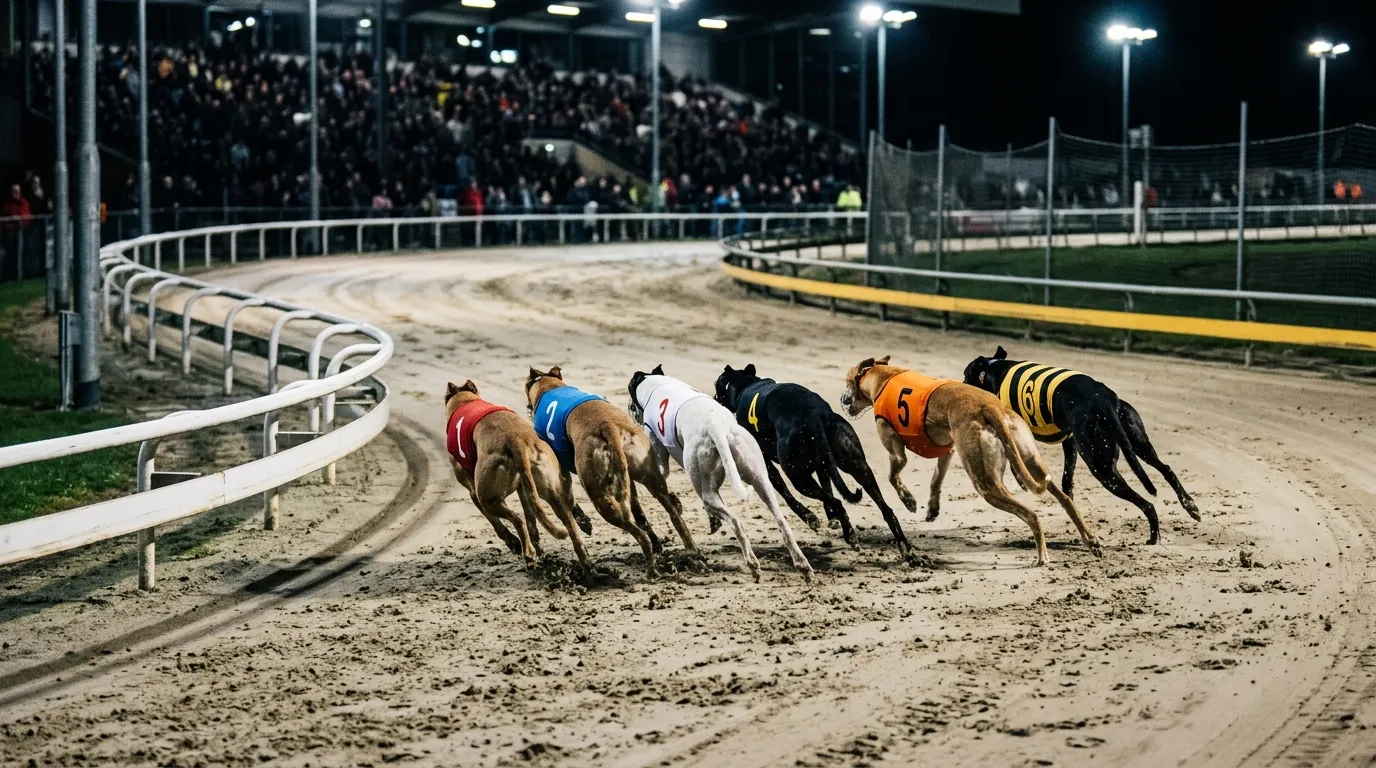
Greyhound races are decided in moments, and the most decisive moment often arrives before the first straight is behind them. The scramble from boxes to first bend—six dogs accelerating, converging, jockeying for position—determines more race outcomes than any other single factor. Win the bend, win the race: it sounds like a cliché until you examine what the statistics actually reveal about leaders and the margins they carry.
This is not about early pace as an abstract virtue. It is about the concrete advantages that accrue to the dog that reaches the first turn ahead of the field. A leader controls the race. A leader runs the shortest distance on the rail. A leader avoids the crowding, checking, and interference that afflicts dogs trying to improve position through a pack of rivals. These advantages compound throughout the remaining bends and straights, turning a half-length lead at the first corner into lengths at the line.
For bettors, understanding first bend dynamics unlocks a different way of reading form. Rather than simply noting who won or lost, the question becomes: who led at the first turn, and what happened to those who did not? This analysis, applied consistently, identifies dogs whose records understate their true ability and others whose success depends on circumstances that may not repeat.
The Statistical Significance of First Bend Leadership
The numbers are unambiguous. According to Timeform analysis, dogs that lead at the first bend win approximately 35% of races. In a six-runner field where random chance would give each dog a 16.67% win probability, leading at the first turn more than doubles a greyhound’s likelihood of victory. This is the single most predictive in-running metric available to bettors.
That 35% conversion rate requires interpretation. It means nearly two-thirds of first-bend leaders do not win, suggesting early pace is necessary but not sufficient. A dog that leads into the first corner must still maintain position, handle the bends cleanly, and hold off challengers in the closing stages. Early pace creates opportunity; class, stamina, and track craft determine whether that opportunity becomes victory.
The corollary statistic matters equally. Dogs that reach the first bend in fifth or sixth position win far less often than their starting prices typically imply. These are the runners forced to navigate traffic, lose ground on every corner, and expend extra energy making up distance. Even talented greyhounds struggle to overcome such positional disadvantage consistently. The races where they do win tend to feature first-bend leaders fading dramatically—uncommon in competitive grades.
Margin at the first bend also influences outcomes. A leader by two lengths entering the turn has better conversion rates than one leading by a head. The comfortable leader can take the racing line without pressure; the narrow leader must defend position immediately, burning energy at the point where efficiency matters most. These distinctions, tracked across hundreds of races, reveal patterns invisible in simple win-loss records.
Romford’s 67-Metre Challenge
Not all tracks present equal challenges to early pace merchants. Romford’s 350-metre circuit features a 67-metre run to the first bend on the standard 400m and 575m distances—a measurement that shapes every race run here. That 67 metres gives dogs precious little time and distance to establish position before the field compresses into the first turn.
Shorter runs to the bend amplify trap draw importance. A dog in trap one has the rail immediately and only needs to break cleanly to secure inside position. A dog in trap six must cover more ground to reach the same bend, crossing the trajectories of five rivals in the process. At tracks with longer runs, middle and wide trappers have more time to find space. At Romford, they must be decisively faster from the boxes to avoid trouble.
The 67-metre distance means early pace here differs from early pace elsewhere. A dog that routinely leads at tracks with 90-metre runs might find itself caught in bunching at Romford. Conversely, an exceptionally quick starter—a dog whose sectional times show blistering first-split speed—gains disproportionate advantage on this tight circuit. The first bend arrives almost before the race has begun, rewarding anticipation and explosive acceleration.
Track familiarity matters for this reason. Dogs that have raced regularly at Romford understand instinctively how quickly they must accelerate. Newcomers, particularly those from galloping tracks with gentler configurations, sometimes misjudge the pace required. A debut run at Romford frequently produces a slower first-bend position than the same dog achieves on return visits. Bettors who note this adjustment pattern can find value in second or third Romford runs when the market underweights improved track knowledge.
The 2019 renovation, which cost £10 million, refined the racing surface and facilities but maintained the essential geometric characteristics. The 67-metre measurement remains the defining feature that any serious Romford analyst must account for. It is the distance in which races are often won or lost before the main action even begins.
Predicting First Bend Position from Form
Form comments provide explicit first-bend information, though many bettors overlook them in favour of finishing positions alone. Running comments like “led” or “ldr” indicate a dog that reached the bend first. Comments such as “disputed” or “pressed leader” suggest near-misses. “Crowded first,” “baulked,” or “slowly away” reveal dogs that lost position early through circumstances beyond their control.
Sectional times offer more precision. The first split—typically measuring time to a point before or just after the first bend—quantifies early pace objectively. A dog that consistently posts fast first splits is demonstrably quick from the traps, regardless of where it finished. A dog whose splits show slow starts but fast finishes has a different profile entirely: a closer who needs things to fall right at the bend rather than a leader who manufactures advantages.
Trap history interacts with early pace data. A dog that leads from trap one may struggle from trap six at the same track. Some greyhounds adapt easily to different box positions; others have pronounced trap preferences that affect their first-bend prospects. Cross-referencing early pace figures with the trap from which each run was made reveals whether a dog’s sectional times reflect genuine speed or favourable circumstances.
Recent runs matter more than distant history. A dog’s early pace can change as it matures, regains fitness after injury, or adjusts to new training regimes. The last three or four runs provide the most relevant data; performances from six months ago may describe a different animal entirely. Form cycles exist in greyhound racing as surely as in any sport, and early pace is often the first attribute to sharpen or dull as a dog’s condition changes.
Betting Applications
All this understanding means nothing without application. Practically speaking, the first step before any race is mapping expected first-bend positions. Which dog has the fastest recent splits? Which has the best trap draw? Which has shown trouble in running that might repeat? Answering these questions creates a mental image of how the first corner is likely to unfold.
The ideal scenario is a dog with proven early pace drawn in a favourable trap against rivals whose form shows either slow starts or trouble at the bend. Such a dog may offer value if the market has focused on finishing positions rather than positional control. A greyhound that has won only once in five runs but led at the first bend in all five is arguably unlucky rather than limited—bad breaks in the closing stages, interference from rivals, or a momentary loss of concentration may have cost victories that the first-bend dominance deserved.
The opposite scenario is a dog whose wins have come from positions that may not repeat. A greyhound that won its last race from a first-bend lead but is now drawn wide against faster starters may find itself fifth into the turn this time. The market price based on recent victory may overstate actual winning chances in the new configuration. Opposing such dogs is not contrarian thinking—it is logical extrapolation from what first-bend data reveals.
Over the course of a betting season, those who understand the 35% conversion rate for first-bend leaders, who factor in Romford’s 67-metre specifics, and who study form for early pace indicators rather than mere results will find themselves ahead of bettors relying on intuition alone. The first bend is where the race is often decided; your analysis should start there too.
First Bend Position in Greyhound Racing — More on this topic at romford greyhound results.
See also Do Greyhound Favourites Win?.
