
Best Greyhound Betting Sites – Bet on Greyhounds in 2026
 Available in US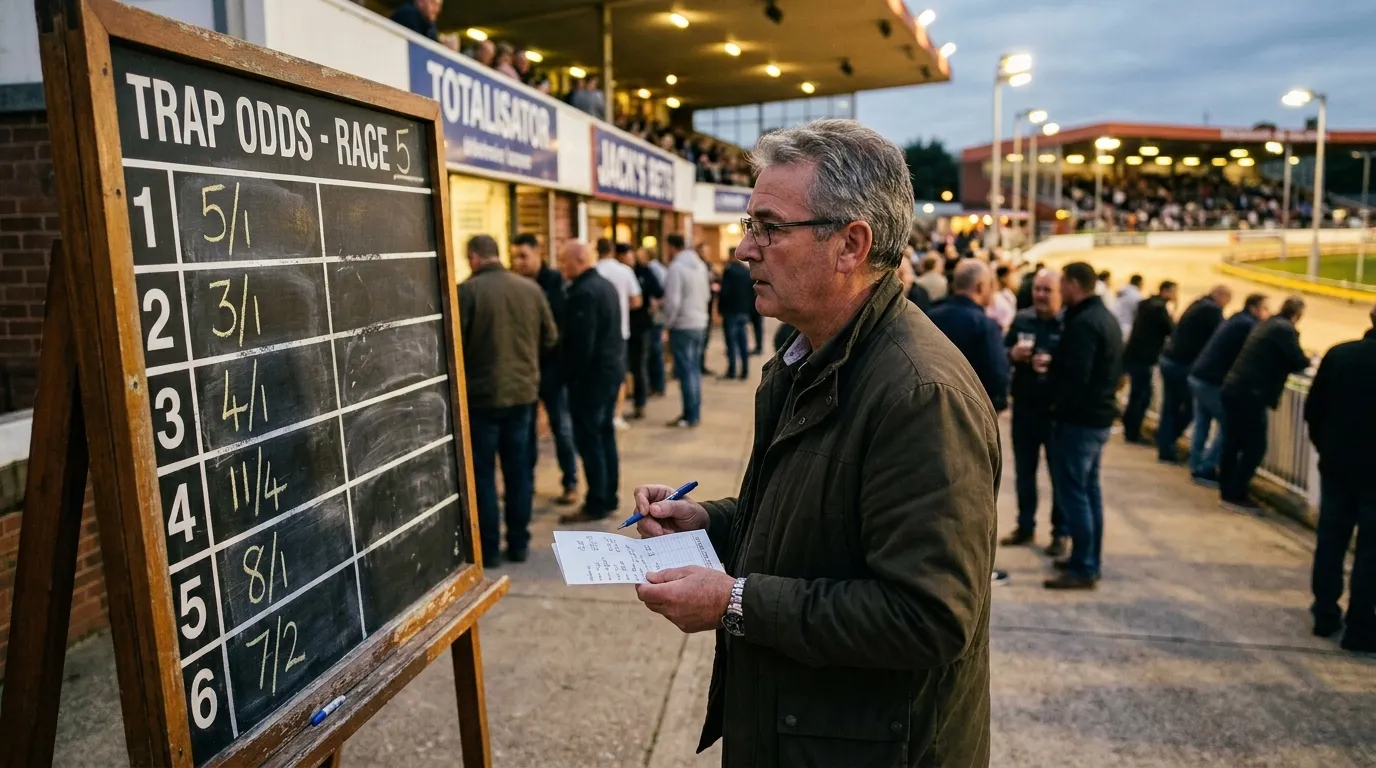
A Romford greyhound betting guide must do more than explain how to place a bet. Anyone can hand over money; the challenge is doing so intelligently over time. At this track, London’s last remaining licensed stadium, the combination of regular racing, varied distances, and well-maintained facilities creates consistent betting opportunities for those who approach with discipline and understanding.
The key to successful greyhound betting lies in recognising that track-specific knowledge beats generic approaches. Romford’s 350-metre circumference, its 67-metre run to the first bend, and its Outside Swaffham lure system all shape how races unfold. A strategy that works at longer-runup tracks might fail here, while angles that exploit Romford’s particular characteristics can provide genuine edge. Bet smarter, not harder, and the results follow.
This guide covers the fundamentals of betting at Romford: bet types and when to use them, how to interpret market signals, the statistics that matter, and the practical realities of managing your betting activity responsibly. Whether you attend the track regularly or bet from home, the principles apply equally. What differs is how you gather information and where you ultimately place your stakes.
Understanding Bet Types
Greyhound betting offers a range of options beyond simply picking the winner. Understanding each bet type, its potential returns, and the situations where it makes sense helps you structure your betting more effectively. Some bets suit races where you have strong opinions; others work better when outcomes are uncertain.
The win bet is the simplest form: you pick a dog to finish first, and if it does, you collect at the advertised odds. Win betting rewards conviction. When your analysis strongly points to one dog, backing it to win captures the full potential of your edge. The downside is binary: if your selection finishes second, you lose the stake entirely.
Place betting softens the binary outcome by paying out if your dog finishes in the specified positions, typically first or second in a six-dog race. The odds are shorter than win odds because you have more winning scenarios, but the reduced risk suits situations where you like a dog but lack certainty it will actually win. Some races see heavy favourites; backing them to place at shorter odds can still generate returns without requiring outright victory.
Each-way betting combines win and place bets in a single wager. Your stake is split, with half on the dog to win and half on it to place. If the dog wins, both parts pay out. If it places but does not win, you lose the win portion but collect the place returns. Each-way betting makes sense for dogs at bigger odds where you see value but cannot be certain of winning.
Forecast betting asks you to predict the first two finishers in exact order. A straight forecast requires naming which dog wins and which comes second, while a reverse forecast covers both combinations, doubling the stake but removing the need to specify order. Forecast odds tend to be generous because predicting two dogs correctly is harder than picking one, but when you identify races where two dogs stand out from the rest, forecasts offer attractive returns.
Tricast betting extends the logic to the first three finishers in correct order. The odds are typically substantial, reflecting the difficulty of predicting three positions precisely. Combination tricasts cover all possible orderings of three selected dogs, requiring six bets but only needing them to finish first, second, and third in any combination. These bets suit competitive races where several dogs appeal.
Exacta and trifecta are alternative terms for forecast and tricast used by some operators, particularly tote pools. The principles remain the same: predict multiple finishing positions for enhanced odds. Pool betting, where stakes are combined and winnings distributed among successful bettors, sometimes offers different returns than fixed-odds markets, making it worth comparing.
Minimum stakes vary between operators and bet types, but greyhound betting generally permits modest stakes. This accessibility means you can spread your activity across multiple races without requiring large individual bets, an approach that reduces variance and suits systematic betting strategies.
Analysing Favourites
The market favourite represents the collective wisdom of the betting public, the dog that most people think will win. Understanding how often favourites actually win, and when they offer value or present opportunities to oppose, is fundamental to profitable betting.
According to OLBG statistics, the favourite in graded UK greyhound races won approximately 35.67% of the time in 2024. That figure has important implications. On one hand, favourites win more often than any other single selection, which is why they are favourites. On the other hand, they lose nearly two-thirds of the time, meaning blind favourite backing at typical prices produces losses over the long term.
The skill lies in identifying when favourites represent genuine value despite their short prices, and when they are over-bet relative to their actual chances. A favourite at 1-2 needs to win 67% of the time to break even, well above the average success rate. Conversely, a favourite at 2-1 only needs to win 33% of the time, making it potentially profitable if it aligns with the overall average.
Grade level affects favourite reliability. In top-grade races where dogs are closely matched in ability, upsets occur more frequently because margins are smaller. In lower grades where ability gaps are wider, standout dogs more consistently convert favouritism into victories. Adjusting your expectations based on the grade helps avoid paying too much for uncertain favourites in open races.
Recent form patterns in favourites deserve scrutiny. A dog favourite because of a single impressive win might be overvalued if that performance represents a peak rather than a baseline. Conversely, a consistent dog with several solid placings might be undervalued by the market if punters chase the flash over the substance.
Opposing favourites becomes attractive in specific circumstances. When a favourite is drawn badly for its running style, or faces a race profile that historically disadvantages front-runners, the odds on alternatives lengthen beyond their true chances. This creates value on second or third favourites that the market has underestimated. Value betting often means finding spots where the favourite is vulnerable rather than simply backing longshots at random.
The key takeaway is treating favourites as data points rather than betting defaults. Sometimes they warrant support; sometimes they should be opposed; sometimes the race is unclear and deserves no bet at all. Developing judgment about which category each favourite falls into separates thoughtful bettors from those who chase short prices or blind outsiders.
Trap-Based Betting Strategies
Starting position influences greyhound race outcomes more than many bettors appreciate. The six traps are not equally advantageous, and at tracks like Romford where the run to the first bend is relatively short, trap draw becomes even more significant. Building trap statistics into your betting strategy adds another dimension to your analysis.
According to The Game Hunter, Trap 1 across UK tracks wins approximately 18-19% of races, compared to a theoretical 16.6% if all traps were equal. This bias exists because rail dogs avoid trouble on their inside and can take the shortest path around the bends. At Romford, with its compact 350-metre circumference, the rail advantage compounds through multiple turns.
The outside traps, particularly Trap 6, face different challenges. A wide draw means covering more ground on every bend, adding metres to the total distance run. Fast dogs from outside traps can overcome this by showing exceptional early pace to reach the first bend in front, but they must be genuinely quick to succeed consistently. A moderate pacer from Trap 6 at Romford is at a significant disadvantage.
Middle traps offer a balance between rail access and avoidance of first-bend traffic. Traps 2, 3, and 4 often see dogs funnelled together as they seek position, creating crowding that can disrupt runners regardless of ability. A dog with quick early pace from these traps can emerge from the traffic; one that lacks early speed risks being shuffled backwards.
Applying trap statistics to betting means comparing expected win rates to actual prices. If Trap 1 dogs win at 18-19% but the market prices them as though they win only 15%, value exists. Conversely, if a Trap 6 dog is priced as though its wide draw is irrelevant, opposing it might make sense unless the dog has proven it can overcome the disadvantage.
Distance affects trap bias interpretation. Sprint races over 225 metres involve fewer bends and a shorter overall trip, reducing the cumulative rail advantage. Staying races over 750 or 925 metres magnify trap effects because dogs navigate more turns and cover greater distance. Adjusting your trap weighting by distance sharpens the analysis.
Forecast and tricast bettors can use trap statistics to construct selections. If your analysis identifies two dogs with strong form but one is drawn in Trap 1 and the other in Trap 6, the trap advantage might push the rail dog higher in your forecast. Building small edges across multiple factors creates positions that, over many bets, produce profits.
Finally, remember that trap statistics represent averages. Individual dogs have their own characteristics, and some runners consistently overcome poor draws through sheer ability or racing style. Trap analysis supplements form reading rather than replacing it, helping you calibrate expectations rather than dictating selections blindly.
How Greyhound Markets Move
Greyhound betting markets are not static. From the moment a race card is published until the traps open, prices shift as money flows and information spreads. Understanding these movements helps you time your bets effectively and spot value before it disappears.
Early prices, available from the morning of race day onward, represent bookmakers’ initial assessments of each dog’s chances. These prices are set before most punters have weighed in, meaning they sometimes contain errors that create early value. A dog that should be 2-1 might open at 3-1 if the morning trader underrates its chances. Experienced bettors look for such discrepancies, backing early when prices exceed their assessment and letting shorter-priced runners drift.
Starting Price, or SP, is the price returned at the moment the race begins. SP depends on market activity in the final minutes before the off, primarily driven by on-course bookmakers at tracks where they operate and by online flows at BAGS meetings. Betting at SP means accepting whatever price emerges, which can be advantageous if a dog drifts (lengthens in price) but disadvantageous if it steams in (shortens).
Steaming and drifting patterns provide useful signals. A dog whose price shortens rapidly often attracts informed money, suggesting someone with inside knowledge or superior analysis believes it will perform well. Drifting prices might indicate concerns: reported issues, unfavourable conditions, or simply public money favouring other runners. Neither pattern guarantees outcomes, but significant moves warrant attention.
The financial context of UK greyhound betting has changed in recent years. According to SBC News, betting turnover on greyhound racing through bookmakers totalled approximately £794 million between April 2023 and March 2024. This substantial volume ensures liquidity across meetings, meaning markets generally reflect genuine opinion rather than thin trading that might create artificial prices.
Mark Moisley, Commercial Director of GBGB, has noted that “revenue from bookmakers is declining year-on-year.” This industry trend reflects changing gambling patterns, with affordability checks and regulatory pressures affecting betting volumes. For individual bettors, the practical impact is minimal, but the broader context explains why the sport works hard to maintain betting engagement.
Timing your bets depends on your strategy. If you identify value early, taking morning prices locks in that edge before the market corrects. If you prefer to wait for late information, such as paddock reports on dog condition, SP betting or late market prices make more sense. Some punters use a combination, taking early prices on strong opinions while reserving stakes for late assessment on less certain selections.
Comparing prices across operators adds another layer. Different bookmakers offer slightly different odds on the same dogs, and shopping for the best available price on your selection increases long-term returns. Odds comparison sites make this easier, though the time required increases with each race.
Romford-Specific Angles
Betting intelligently at Romford requires understanding what makes this track distinctive. The physical characteristics, the racing dynamics they create, and the patterns that emerge across different distances all provide angles that generic betting advice overlooks.
The 67-metre run to the first bend on standard distances is Romford’s defining feature. This relatively short approach means dogs must break quickly from the traps to establish position before the first turn. A slow trapper, regardless of its ability once running, finds itself at an immediate disadvantage. Dogs with poor early pace often get squeezed out or forced wide, losing lengths that may prove irrecoverable.
This layout favours dogs that show consistent early sectional times. When analysing form at Romford, weight sectional data heavily. A dog that consistently reaches the first bend in the front three is playing to the track’s characteristics, while a closer that needs to pick off rivals may struggle if racing room closes.
Sprint races over 225 metres amplify early pace requirements further. Over this trip, dogs barely settle into their stride before reaching the first bend, then the second. There is minimal recovery opportunity, meaning trap draw and break speed dominate outcomes more than at any other distance. Backing slow-breaking dogs in Romford sprints is generally futile unless they have proven abilities to overcome the disadvantage.
The standard 400-metre race at Romford involves approximately two and a half circuits, with the first bend dynamics influencing position throughout. Dogs that lead after the first bend hold the rail and cover the shortest path. Those trapped wide must either push through from behind or cover extra ground on every turn. Understanding this helps you assess whether a dog’s finishing position reflects its ability or merely its trap draw.
Staying races over 575, 750, and 925 metres provide more time for positions to change, but the first bend still matters. A dog losing ground early must make it up somewhere, expending energy that rivals conserve. Strong finishers from this track tend to combine reasonable early pace with sustained stamina, rather than relying purely on late surges.
Trainers who regularly place dogs at Romford often develop track-specific expertise. Their runners know the circuit, respond to familiar conditions, and benefit from informed preparation. Noting which kennels consistently perform well here, versus those whose visitors from other tracks struggle, provides an additional betting edge.
Weather and surface conditions affect Romford like any track, but the compact circuit means wet conditions create tighter racing. Fewer opportunities to spread out combined with slightly slower going can disadvantage early pace specialists who usually escape trouble. Adjusting for conditions, particularly when booking early prices before seeing the track on race day, reduces avoidable errors.
Bankroll Management
All the form knowledge and track insight in the world counts for nothing without disciplined bankroll management. Greyhound racing offers frequent betting opportunities, which is both an advantage and a danger. The same accessibility that allows systematic punters to exploit their edge gives impulsive bettors ample opportunity to chase losses.
Establishing a betting bank, a designated sum specifically for greyhound betting, creates the foundation. This amount should be money you can afford to lose entirely without affecting your life. Treating it as an investment rather than disposable entertainment helps maintain discipline when results go against you, which they inevitably will at times.
Staking in units, typically 1% to 5% of your bank per bet depending on confidence, controls risk. A £500 bank might use £5 or £10 stakes for standard bets, scaling up to £20 or £25 for strongest selections. This approach ensures that losing streaks do not wipe you out while allowing meaningful returns when you win. Fixed-percentage staking adjusts stakes automatically as your bank grows or shrinks.
Variance is unavoidable in betting. Even sound strategies experience losing periods because outcomes contain randomness. A 30% strike rate means 70% of bets lose, and unlucky sequences where losses cluster together happen more often than intuition suggests. Mental preparation for these spells prevents panic reactions like doubling stakes to recover quickly, which typically accelerates losses.
Setting session limits provides additional protection. Deciding before a meeting that you will bet no more than a certain amount, regardless of how results unfold, prevents the common pattern of chasing losses with increasingly desperate selections. Walking away when the limit is reached, even if opportunities appear to remain, builds the habits of disciplined betting.
Record keeping reveals patterns that memory obscures. Tracking every bet, including the reasoning behind it and the outcome, allows you to review performance objectively. You might discover that your sprint race selections outperform staying races, or that opposing favourites produces better results than backing them. Data-driven adjustments improve results over time.
Finally, remember that betting should remain enjoyable. If greyhound racing stops being fun and becomes a source of stress or financial pressure, stepping back is the sensible choice. Resources exist for those who feel their betting has become problematic, and there is no shame in using them. Responsible betting is not just an industry slogan; it is the foundation of sustainable engagement with the sport.
Where to Place Your Bets
Bettors have multiple options for placing greyhound wagers, each with distinct advantages depending on your preferences and priorities. Understanding the landscape helps you choose the approach that best suits your betting style.
On-track betting at Romford itself offers the most immersive experience. Tote windows and on-course bookmakers operate during meetings, allowing you to watch the dogs parade, assess their condition, and make last-minute decisions based on what you see. The atmosphere adds enjoyment, though being present is obviously not possible for those betting remotely or on multiple meetings simultaneously.
Online bookmakers provide the most flexibility for regular bettors. Most major UK operators cover Romford fixtures comprehensively, offering early prices, competitive odds, and live streaming to account holders. The ability to compare odds across multiple sites, bet on other meetings simultaneously, and access detailed statistics makes online betting the practical choice for serious punters.
Betting shops remain part of the greyhound betting landscape, particularly for afternoon BAGS meetings when football and horse racing are quiet. The social aspect appeals to some, and the ability to watch races on large screens without needing personal devices suits certain bettors. However, betting shop odds are typically fixed at SP or displayed prices, offering less flexibility than online markets.
Exchange betting, where punters bet against each other rather than against bookmakers, suits certain approaches. Laying dogs to lose, rather than backing them to win, becomes possible on exchanges. Liquidity can be thinner than fixed-odds markets for greyhound racing, but for specific strategies, exchanges offer opportunities unavailable elsewhere.
Whatever channel you choose, ensuring your chosen operator is licensed by the UK Gambling Commission provides basic protection. Licensed operators must meet regulatory standards, offer responsible gambling tools, and maintain customer funds appropriately. Betting with unlicensed operators, while occasionally tempting for enhanced odds, carries risks that sensible punters avoid.
The integration of live streaming with betting platforms has become increasingly sophisticated. Watching a race live while following your selections adds engagement and allows real-time learning about how races develop. Most online operators offer streaming for Romford meetings to funded accounts, making remote betting an increasingly complete experience.
Romford Greyhound Betting Guide — More on this topic at romford greyhound results.
See also Romford Track Analysis.
