
Best Greyhound Betting Sites – Bet on Greyhounds in 2026
 Available in US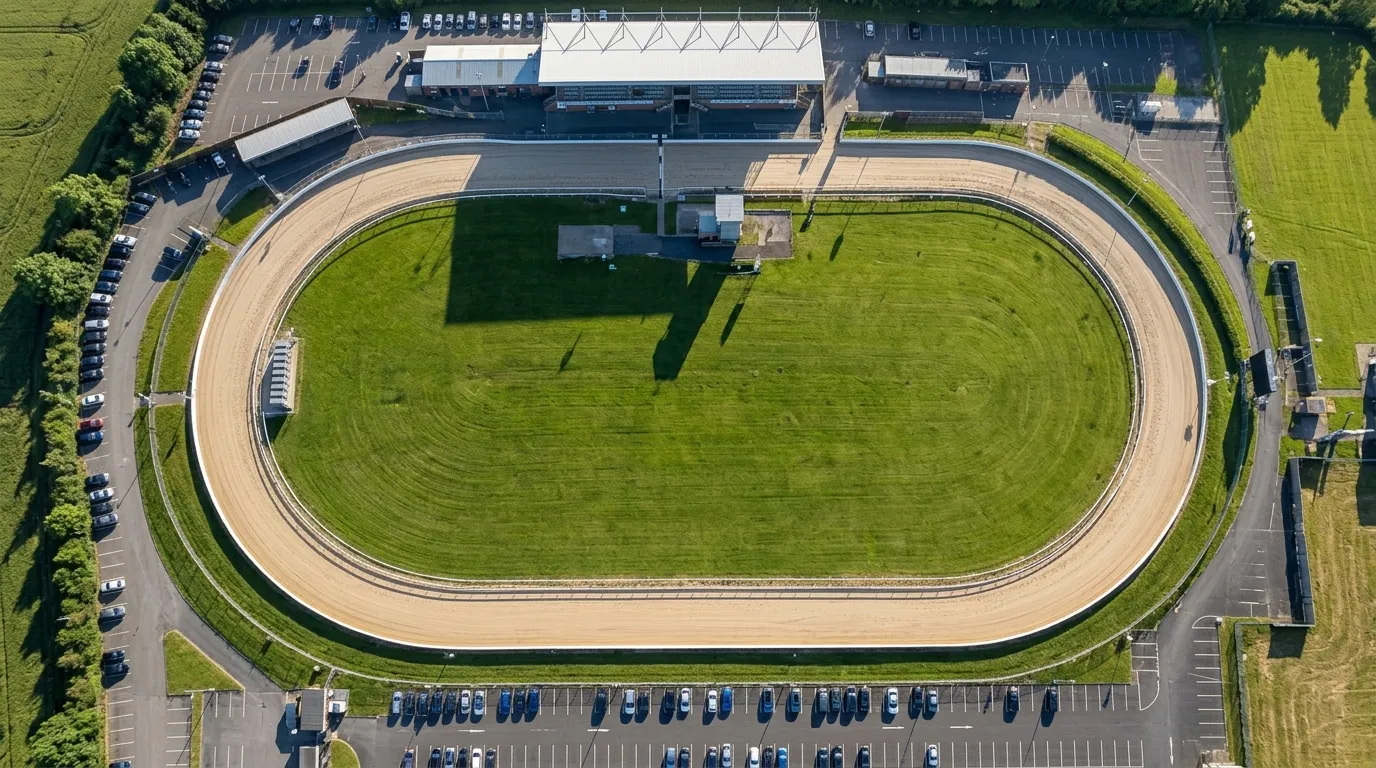
Romford greyhound track analysis reveals why this venue produces different racing patterns than other UK circuits. Every track has its quirks, but Romford’s combination of tight bends, short run-ups, and specific distances creates conditions that reward particular running styles while punishing others. Understanding these dynamics separates those who bet with knowledge from those who simply hope.
As London’s last remaining greyhound stadium following Crayford’s closure in January 2025, Romford carries unique significance. The track hosts regular meetings that draw serious bettors and casual fans alike, but the racing itself demands specific understanding. A dog that wins comfortably at a longer-runup venue may struggle here, while a consistent Romford performer might fail away from home. Every bend tells a story, and reading those stories correctly is the foundation of successful track-based betting.
This analysis covers the technical specifications that define racing at Romford, from circumference to lure type. It breaks down each distance offered, examining what each demands from competitors. The first-bend dynamics that determine so many outcomes receive detailed attention, as does the impact of the 2019 renovation on racing patterns. Safety standards, surface conditions, and comparisons with other tracks complete the picture. By the end, the numbers and their practical implications should be clear.
Track Specifications
The numbers that define Romford tell you how races will unfold before a single trap opens. According to the Romford Stadium official website, the track operates on a 350-metre circumference with four bends, placing it among the tighter circuits in British greyhound racing. This compact layout means dogs navigate turns more frequently per race, amplifying the importance of bending ability and rail access.
The run to the first bend measures 67 metres for the 400-metre and 575-metre distances. This figure matters enormously because it determines how much time dogs have to establish position before the first turn. At tracks with 80 or 90-metre runs, moderate early pace can still secure acceptable positions. At Romford’s 67 metres, dogs must break sharply or risk immediate disadvantage. The arithmetic is simple: less distance to the bend means less time to react, which means early speed carries disproportionate weight.
Romford uses an Outside Swaffham mechanical lure, the artificial hare that dogs chase around the circuit. This lure type runs on the outside rail, meaning dogs pursue a target that moves along the outer edge of the track. The practical implication is that all dogs naturally angle toward the outside initially before straightening into their running lines. How quickly a dog settles into position after the break, rather than drifting wide following the lure, affects its competitive position at the first bend.
The track surface is sand-based, maintained to consistent standards set by the GBGB. Regular grading keeps the surface level, while drainage systems manage wet conditions. However, no two racing days are identical. Temperature, recent rainfall, and cumulative wear between maintenance sessions all affect how fast the surface runs. Serious form students note going conditions alongside bare times, recognising that a 23.50 on a slow track might indicate more ability than a 23.30 on a flying surface.
Facilities underwent comprehensive renovation in 2019, but the track geometry itself remained consistent. The bends, the distances, the fundamental layout are the same circuit that has operated for decades. What changed was the infrastructure around it: surface quality, drainage, safety features, spectator areas. Racing patterns remained broadly comparable, meaning historical data retains relevance when adjusted for the surface improvements that slightly quickened times post-renovation.
Capacity figures vary by source, with some reporting over 1,700 and others citing 4,300 following the renovation. The exact number matters less than understanding that Romford operates as a professional venue with proper facilities for both racing and attendance. On-course betting, dining, and viewing areas meet modern standards, creating an environment where serious racing takes place rather than a fading relic running on nostalgia.
Distance Breakdown
Romford offers five distinct distances, each producing different racing dynamics and favouring different types of greyhounds. Understanding what each trip demands helps you assess whether a dog’s form translates to the distance at hand or whether it is being asked to do something outside its comfort zone.
The 225-metre sprint is pure speed. Dogs cover this distance in approximately 13 to 14 seconds, barely enough time to accelerate, reach the first bend, navigate it, and cross the finish line. The current track record stands at 13.17 seconds, set by Chopchop Rainbow on 28 October 2022. Sprint racing at Romford rewards dogs with explosive early pace and clean breaking ability. Stamina is irrelevant; tactical racing barely exists. The first dog clear at the bend usually wins, making trap draw and break speed the dominant factors.
Standard 400-metre races are Romford’s bread and butter, with the track record jointly held at 23.26 seconds by Roxholme Nidge from 15 September 2017 and Magical Luka from 5 September 2025. This distance involves roughly two and a half laps, demanding both pace and the ability to sustain it through multiple bends. Dogs need to break reasonably, hold position through the first two turns, then have enough left to see out the race. Form over 400 metres at Romford provides the most reliable indicator of overall ability at this venue.
For completeness, Romford also offers 400-metre hurdles, with the record of 23.99 seconds held by Glenwood Dream since 23 April 2010. Hurdle racing adds obstacles that dogs must clear while maintaining pace, testing jumping ability alongside speed. The hurdle record being slower than the flat record by roughly seven-tenths of a second reflects the extra demands.
The 575-metre middle distance represents a step up in stamina requirements. New Destiny holds the track record at 34.53 seconds, set on 14 June 2024. Races over this trip involve more than three circuits, meaning dogs navigate multiple bends and must maintain effort over a longer duration. Early pace still matters due to the 67-metre run-up, but dogs with strong finishes have more time to work through the field if they lose early ground. Middle-distance form at Romford often identifies genuine quality rather than one-paced sprinters.
Staying races over 750 metres require proper stamina. Avit On Bertha holds the record at 46.37 seconds from 12 December 2012. These races suit dogs bred for endurance who can maintain speed through approximately four laps. Early pace remains relevant for position, but dogs that struggle after 500 metres will be found out regardless of how they started. Staying form can be harder to assess because fewer dogs run these trips regularly, but consistent performers over 750 metres tend to handle the demands race after race.
The marathon distance of 925 metres tests genuine stamina specialists. Riverside Honey holds the record at 58.57 seconds, set on 6 September 2019, the day of the renovated track’s reopening. Marathon races are relatively rare at most tracks, making form assessment more challenging. Dogs need to pace themselves, conserve energy through the early bends, and produce their effort when others tire. Strong finishers with genuine stamina have the most success over this demanding trip.
When assessing form across distances, note that some dogs show clear preferences. A specialist sprinter might have lightning early pace but fade beyond 400 metres. A stayer might lack the acceleration to compete over 225 metres but dominate at 750 or 925. Matching dog to distance is fundamental to accurate form reading at Romford.
First Bend Dynamics
The 67-metre run to the first bend defines more outcomes at Romford than any other single factor. This distance determines how much time six dogs have to sort themselves from a standing start into a single-file racing line. At tracks with longer runs, gradual positioning is possible. At Romford, everything happens faster, and small disadvantages magnify into decisive ones.
Consider the physics. Six dogs leave traps spaced across approximately ten metres of track width. They accelerate toward a bend that requires them to funnel into a much narrower racing line, ideally along the inside rail. With 67 metres to achieve this, dogs in mid-pack traps must either outpace their rivals to reach the bend ahead or yield ground and slot in behind. There is little time for nuance.
Dogs with fast early sectional times, the split times that measure pace to various points, thrive in this environment. A dog that consistently reaches the first bend in 4.5 seconds at Romford has a significant advantage over one that takes 4.8 seconds, even if their finishing times are similar. That three-tenths of a second translates to several lengths of ground, often the difference between clear running and being shuffled back into traffic.
Trap draw interacts directly with first-bend dynamics. Trap 1 dogs have the inside rail and the shortest path around the bend. If they break level, they can hold the rail and force rivals to go around them. Trap 6 dogs face the opposite challenge: they must either break fast enough to cross the field and claim the rail, or accept covering extra ground on every bend. At longer-runup tracks, wide dogs have more time to manoeuvre. At Romford, the 67 metres compress everything.
Crowding at the first bend creates specific patterns. When two or more dogs reach the turn together from central traps, they often bump or check each other as both seek the same racing room. Dogs that can handle close-quarters running, maintaining stride when brushed rather than losing momentum, fare better than those that need clear running to show their best. Racing style matters as much as raw speed.
Form students should note first-bend positions in race comments and sectional data. A dog described as leading first bend before winning comfortably is showing the profile that suits Romford. A dog that won despite being fourth at the first bend displayed quality to overcome the track’s bias against slow starters. Both are useful form indicators, but they suggest different betting angles in future races.
Dogs moving to Romford from tracks with longer runs often struggle initially. Their timing is set for gradual acceleration rather than explosive breaks. Conversely, Romford specialists sometimes underperform at venues where their sharp early speed provides less advantage. This track-to-track variation creates betting opportunities when dogs switch venues and the market fails to adjust appropriately.
The 2019 Renovation
On 6 September 2019, Romford Stadium reopened following a comprehensive renovation costing £10 million according to the stadium’s official website. The investment transformed facilities while preserving the track’s fundamental character, creating a modernised venue that meets contemporary standards without losing its identity as a serious racing circuit.
The renovation addressed multiple aspects of the venue. Track surface improvements included new sand composition and better drainage systems, creating more consistent running conditions and reducing the impact of adverse weather. These surface upgrades produced slightly faster times across all distances, as reflected in several track records set in the years following reopening. The 925-metre record by Riverside Honey, set on reopening day itself, demonstrated the improved surface immediately.
Spectator facilities received significant attention. Dining areas, bars, viewing positions, and general amenities were upgraded to modern expectations. The result is a venue that attracts casual visitors as well as dedicated racing fans, supporting the commercial viability that allows the track to continue operating when other stadiums have closed.
Safety features improved as part of the renovation programme. Track railings, running surfaces, kennel facilities, and veterinary areas all benefited from the investment. These improvements align with GBGB standards that have tightened over recent years, ensuring Romford meets the regulatory requirements for licensed racing while providing safer conditions for competing greyhounds.
For form assessment purposes, the renovation creates a dividing line in historical data. Pre-2019 times require adjustment when comparing to post-renovation performances. The faster surface means a dog running 23.40 today might be equivalent to one running 23.50 before the renovation. Serious form students account for this shift rather than taking raw times at face value across the divide.
Track records from before 2019 mostly fell in the years following the renovation, reflecting the improved surface rather than necessarily superior dogs. When a record stands for many years after the renovation, as some now do, it likely indicates a genuinely exceptional performance rather than simply favourable conditions. The 750-metre record from 2012, still standing despite the faster post-renovation surface, demonstrates the difficulty of that particular mark.
Track Safety Standards
Track safety at Romford operates within the GBGB regulatory framework that applies to all licensed venues. This system involves regular inspections, professional consultancy, financial investment in safety improvements, and ongoing monitoring of racing outcomes. The standards reflect modern expectations rather than historical complacency about greyhound welfare.
According to GBGB 2024 data, STRI consultants conducted 80 advisory visits to licensed tracks across the UK during 2024. These visits involve professional assessment of track surfaces, bend profiles, running rails, and other factors that affect racing safety. Recommendations from these visits guide maintenance and improvement work throughout the year.
The Track Safety Committee Fund distributed £168,000 in grants during 2024 to support safety improvements across licensed venues. These grants help tracks implement recommendations from STRI visits and other assessments, covering costs that might otherwise delay necessary upgrades. The fund represents the sport’s collective investment in maintaining and improving racing conditions.
Jeremy Cooper, Chair of GBGB and former Chief Executive of the RSPCA, has addressed the sport’s approach to welfare directly. “We are realists within this sport and we are actively involved in the welfare of greyhounds on a daily basis,” he noted. “We are not a sport that pontificates or plays to the crowd. We get on with doing the right thing.” This framing positions greyhound racing’s welfare efforts as practical rather than performative, focused on measurable outcomes rather than publicity.
Romford, as a major venue that received substantial investment in 2019, benefits from modern safety infrastructure. The post-renovation track surface, drainage, railings, and facilities all meet current standards. Regular maintenance ensures these standards are maintained rather than eroding over time. Veterinary presence during meetings provides immediate response to any incidents, while welfare officers oversee overall care of racing greyhounds.
Injury data across licensed racing shows improvement over recent years, though any injuries remain of concern to those involved. The 1.07% injury rate recorded across UK licensed racing in 2024 represents the lowest on record, reflecting cumulative investment in safety measures at tracks like Romford. This progress does not eliminate risk, but it demonstrates that sustained attention to safety produces measurable results.
For bettors, track safety affects racing in practical ways. A well-maintained surface produces more consistent times and fewer interruptions from incidents. Proper drainage means fewer cancellations for weather. Professional management reduces the variables that introduce randomness unrelated to the greyhounds themselves. Betting at well-maintained tracks like Romford means dealing with fewer external factors that distort form.
Surface Conditions
Every race at Romford takes place on the same sand-based surface, yet conditions vary significantly between meetings. Understanding these variations helps you compare performances fairly and recognise when a time reflects the track rather than the dog.
Going conditions affect times significantly. On fast-going days, when the surface is firm and dry, dogs record quicker times across all distances. On slow-going days, often following rain or during cold periods, the same dogs run noticeably slower. Understanding going allows you to compare performances fairly rather than treating all times as equivalent regardless of conditions.
Romford’s drainage systems, upgraded during the 2019 renovation, handle rain better than older infrastructure might. Water clears from the surface relatively quickly, reducing cancellations and minimising extended periods of slow going. However, heavy or persistent rain still affects conditions, and race cards sometimes note that going has deteriorated during a meeting.
Seasonal patterns exist but are not absolute. Winter generally sees slower surfaces due to cold temperatures and increased moisture. Summer typically produces faster going as warmer, drier conditions firm the surface. Spring and autumn fall between these extremes, often with more variability day to day. Experienced bettors note seasonal context when assessing recent form.
Some dogs perform better on specific going. Front-runners sometimes prefer faster surfaces where their early speed creates maximum advantage. Dogs with strong finishes might favour slightly slower going that blunts the advantage of early pace and gives them time to close ground. Noting which conditions suit individual dogs adds another layer to form analysis.
Track maintenance between meetings includes grading to level the surface, adjusting sand depth, and repairing any damage from previous racing. The quality of this maintenance affects consistency. Well-maintained tracks produce predictable conditions; poorly maintained ones introduce variability that makes form assessment harder. Romford’s status as a major venue with proper resources supports consistent maintenance standards.
Comparing Romford to Other Tracks
Romford’s characteristics become clearer when set against other GBGB venues. The differences in circumference, run-up distance, and overall layout mean that form does not transfer straightforwardly between tracks. Understanding these variations helps assess whether a dog moving to Romford will improve, decline, or perform similarly.
Towcester, until its operations paused, offered a different challenge entirely with its undulating surface and longer circumference. Dogs that thrived on Towcester’s unique terrain sometimes struggled at flatter, tighter tracks like Romford. The reverse also applied: Romford specialists found Towcester’s gradients uncomfortable. Such track-specific requirements mean form from one venue requires adjustment for another.
Nottingham operates on a 400-metre circumference, larger than Romford’s 350 metres. The additional space creates slightly different racing dynamics: wider turns, more room to manoeuvre, less compression at bends. Dogs switching from Nottingham to Romford face tighter bends and a shorter run-up, potentially compromising their usual racing style.
Central Park in Sittingbourne, another major venue, has its own characteristics that differ from Romford. Understanding these venue-by-venue variations is essential for anyone following dogs across the UK circuit rather than focusing on a single track.
For form analysis purposes, certain tracks group together as broadly similar. Romford’s tight circuit and short run-up find rough equivalents at other compact venues, even if no two tracks are identical. Dogs that show consistent form across such venues are proving they can handle a particular type of track rather than excelling at one specific circuit. This versatility often indicates quality that transfers more reliably.
Trainers who regularly place dogs at Romford develop understanding of what works at this venue. Their runners often show consistent improvement as they gain experience with the specific demands: breaking quickly, handling the tight first bend, sustaining effort through multiple laps. Conversely, trainers based far from Romford who send occasional runners face the challenge of preparing dogs for unfamiliar conditions.
When a dog arrives at Romford with form from other tracks, assess whether its profile suits the venue. A dog with average early pace but strong finishing ability might win at tracks with longer runs but struggle at Romford where the first bend determines so much. A sharp-breaking specialist from Romford might underperform at venues that do not reward that skill as heavily. Matching dog to track is fundamental, and Romford’s specific demands make this assessment particularly important.
Romford Track Analysis — More on this topic at romford greyhound results.
See also Greyhound Welfare UK.
