
Best Greyhound Betting Sites – Bet on Greyhounds in 2026
 Available in US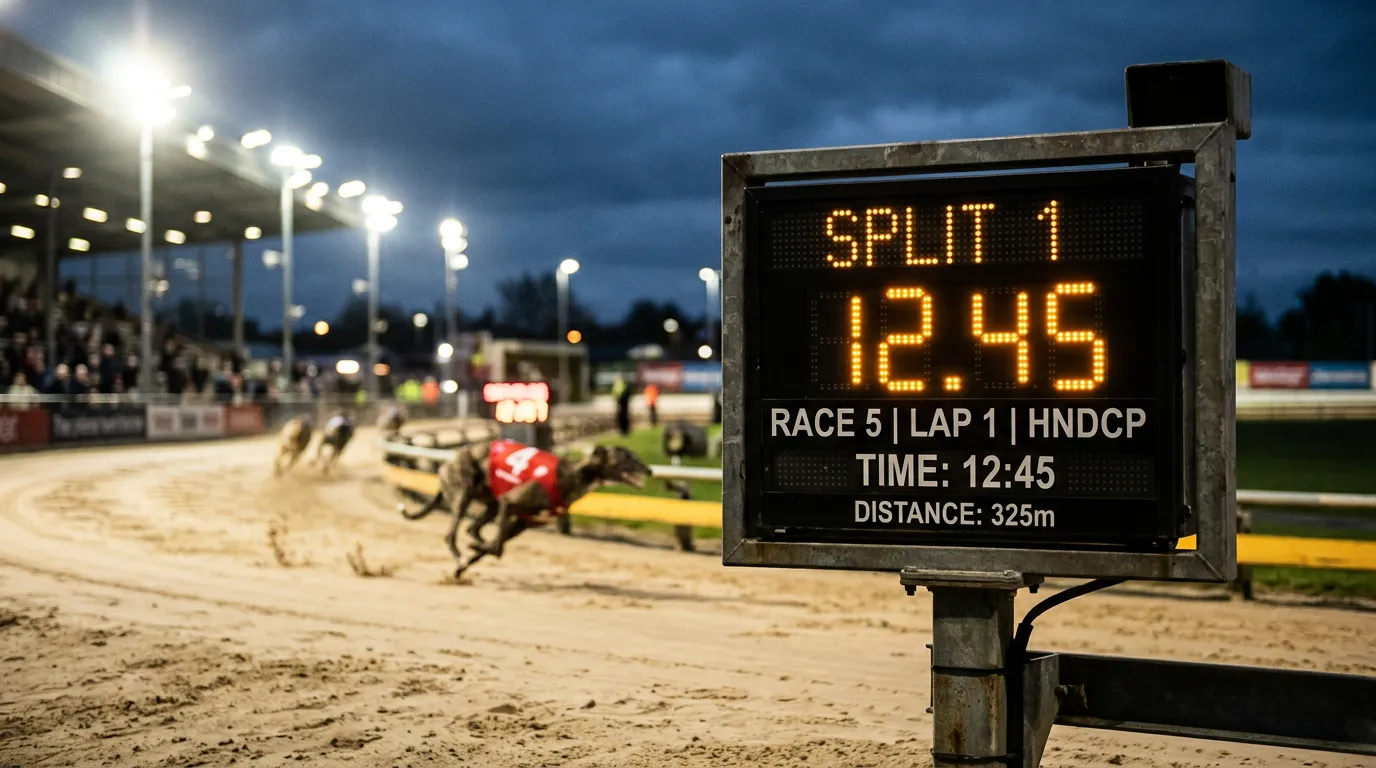
Sectional times in greyhound racing provide a window into race dynamics that finishing times alone cannot reveal. A dog that wins in 23.50 seconds might have led from trap to line with fading stamina or surged through from last at the first bend. The clock at the finish treats both performances identically, but sectional splits expose the underlying patterns that matter for predicting future performance.
Time tells truth in racing. While form figures show results, sectional analysis shows how those results happened. Understanding what each split measures, recognising the signatures of different running styles, and applying this knowledge at specific tracks like Romford transforms raw data into actionable insight. What follows breaks down sectionals from concept to practical betting application.
What Sectional Times Actually Measure
A greyhound race divides into distinct phases, each testing different attributes. Sectional timing captures performance through these phases separately, revealing information invisible in overall time.
The first sectional covers the run from traps to the first bend. This measures break speed, early pace, and the ability to handle initial crowding. Fast first sectionals indicate dogs that compete for early position—critical given that leaders at the first bend win roughly 35% of races according to Timeform analysis. Slow first sectionals might indicate poor trap exit, interference, or running style that prioritises finishing speed over early position.
Middle sectionals—bend to bend—capture how dogs handle turns and racing in traffic. A dog that posts strong middle sectionals typically rails well, corners efficiently, and maintains rhythm through congested racing. Weak middle sectionals might indicate a dog that runs wide, loses momentum on turns, or struggles when surrounded by other runners.
The closing sectional—final straight to finish—measures stamina, determination, and the ability to sustain or increase pace when tired. Strong closers post their best sectionals here, while confirmed front-runners often show declining splits through this section. The finishing sectional also reveals dogs that quicken off the final bend versus those that simply maintain pace to the line.
Each sectional tells a different story. A dog with blazing first sectionals but poor closers might dominate when getting an easy lead but capitulate when challenged. A dog with modest early splits but exceptional finishing sectionals represents a different betting proposition entirely—they need the race to develop a particular way to have any chance, but when it does, they finish powerfully.
Reading the Numbers: Fast Early vs Fast Late
Interpreting sectional data requires understanding what constitutes strong, average, and weak splits at each race phase. Raw numbers mean nothing without context.
Front-runners typically show their best work in the first sectional, declining through subsequent splits as early effort takes its toll. This pattern works when they secure uncontested leads—the declining splits don’t matter if nobody can catch them. The warning sign appears when a front-runner’s finishing sectional drops significantly below par while rivals post strong closers. This dog might be vulnerable when meeting better early pace competition.
Closers display the opposite pattern: unremarkable or even poor first sectionals, strengthening through the middle, and posting their best work at the finish. These dogs require races run at honest early tempo. If front-runners control pace without pressure, closers never get the setup they need. Reading sectionals for closers means identifying whether their finishing speed results from genuine ability or simply cruising while others exhaust themselves.
All-the-way performers—dogs that show strong sectionals throughout—represent the most reliable types. They can lead, dispute the lead, or stalk just behind leaders and still finish effectively. Their sectional pattern lacks dramatic variation; consistency across phases signals genuine class.
Red flags in sectional data include dramatic dropoffs in any section, inconsistent patterns race to race, and abnormal splits that suggest trouble in running. A dog that typically posts 5.50 first sectionals suddenly posting 5.90 either encountered traffic or has developed a problem. One slow sectional on its own means little; repeated slow sectionals in the same race phase indicate a genuine limitation worth noting.
The trap draw interacts with sectional expectations. Inside draws allow dogs to run freely, showing their natural sectional patterns. Wide draws, particularly at tight tracks, can artificially inflate middle sectionals as dogs cover extra ground on bends. Comparing sectionals requires accounting for where the dog ran.
Sectionals at Romford
Romford’s track specifications shape how sectionals should be interpreted at this venue specifically. The 67-metre run to the first bend—documented on the official Romford track records page—creates particular dynamics worth understanding.
The short run-up compresses first sectionals. Dogs have less time to establish position, meaning first-bend sectionals at Romford reflect trap break and initial acceleration more than extended early pace. A dog that posts fast first sectionals at tracks with 80-metre run-ups might show slightly slower splits at Romford without any deterioration in actual speed—the measurement distance simply differs.
Romford’s 350-metre circumference means the bends come quickly throughout the race. Middle sectionals therefore carry heightened importance. Dogs that corner poorly or lose momentum on turns show this weakness consistently at Romford, where bend-handling matters more than at larger circuits. Strong Romford form often correlates with strong middle sectionals.
The finishing sectional at Romford covers a standard home straight. This measurement remains comparable to other tracks, making closing splits useful for cross-track form comparison. A dog that posts exceptional finishing sectionals at Romford should show similar ability elsewhere, though the setup they need to produce those splits might vary.
When analysing sectional data for Romford races, weight first-bend position heavily. The short run-up and tight geometry mean that dogs establishing early position maintain significant advantage. Sectionals should be read with this context: a dog showing moderate first splits but strong closers at Romford might not reproduce the necessary finishing burst if their path to the first bend gets blocked at this compact circuit.
Converting Sectional Analysis to Betting Edge
Sectional analysis delivers value when it reveals information the market hasn’t priced. The process involves spotting hidden form, projecting race shapes, and identifying when running style suits specific race conditions.
Hidden form emerges when sectionals show a dog ran better than their finishing position suggests. A dog that finished fourth but posted the fastest closing sectional was running on strongly when the race ended—a wider margin of defeat might have followed if the race lasted longer, but equally, a slightly different pace setup might have seen them win. Sectionals identify these performances that raw results obscure.
Race shape projection uses sectional patterns to anticipate how a race will unfold. Three fast early-pace dogs from inside traps suggests a contested first bend, benefiting confirmed closers. A race lacking any dogs with strong first sectionals might produce slow early fractions, helping front-runners conserve energy for the finish. Sectional profiles for each runner allow you to script the likely race narrative before it happens.
Running style suitability connects sectional patterns to race conditions. Wet tracks tend to favour dogs with strong middle sectionals who rail effectively. Quick tracks reward pure early pace when the surface allows dogs to maintain speed. Certain distances suit certain profiles—staying races favour dogs with sustainable pace across all sectionals, while sprints reward those who front-load their effort.
The practical application requires recording sectional data systematically, noting patterns over multiple races rather than single performances. A dog whose closing sectional improved across their last three runs shows developing stamina. A dog whose first sectionals have slowed might be experiencing trap problems or declining early pace. Trends matter more than snapshots, and sectional analysis rewards consistent attention over time.
Sectional Times in Greyhound Racing — More on this topic at romford greyhound results.
See also Greyhound Bet Types.
