Best Greyhound Betting Sites – Bet on Greyhounds in 2026
 Available in US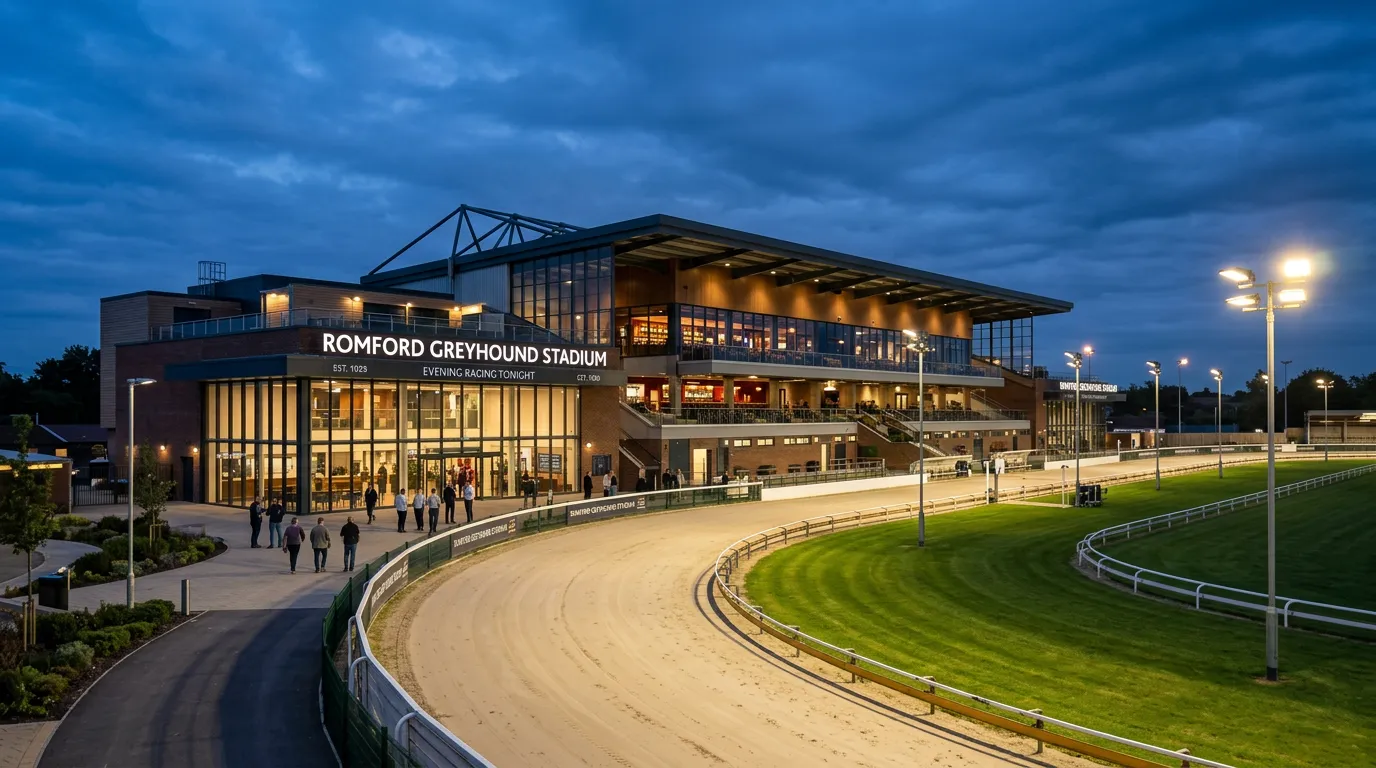
Romford Greyhound Stadium has witnessed nearly a century of racing, surviving world wars, economic upheavals, and the slow decline of a sport that once rivalled football for British working-class attention. Today it stands as London’s last licensed greyhound track—a distinction earned not through any grand plan but through the simple fact of outlasting every competitor in the capital.
The stadium’s history mirrors the broader arc of British greyhound racing: explosive early growth, post-war golden years, gradual contraction, and an uncertain but stubborn present. Understanding where Romford came from illuminates what it represents now—not just a venue for racing and betting, but a physical link to an era when a night at the dogs meant something different than it does today.
The Founding Years
Romford opened its gates on 21 June 1929, joining a rush of greyhound stadium construction that transformed British leisure in the late 1920s. The sport had arrived from America just three years earlier, with Belle Vue in Manchester hosting the first official UK race on 24 July 1926. Within that brief window, greyhound racing exploded across Britain, and Romford emerged as part of the London area’s answer to northern tracks.
The original stadium occupied a different site than today’s venue. Just two years after opening, in 1931, Romford relocated to its current position on London Road. This early move proved fortunate—the new location offered better transport links and room for the facilities that would support decades of racing. The current site has hosted continuous greyhound racing for over ninety years, making it one of Britain’s most enduring sporting venues.
Those founding years established Romford’s identity. The stadium drew crowds from across Essex and East London, offering affordable entertainment during the Depression years when money was tight but the desire for excitement remained strong. The track developed its character: a compact 350-metre circuit that rewarded speed and tactical racing. Dogs and their handlers built reputations here, and the stadium became woven into local life in ways that transcended mere entertainment.
The 1930s brought experimentation alongside establishment. In 1937, Romford hosted one of British sport’s more unusual trials—racing a cheetah against greyhounds. The experiment demonstrated what biologists already knew: cheetahs possess acceleration and top speed beyond any dog. But the spectacle drew crowds and press attention, cementing Romford’s reputation for innovation and showmanship. The track wasn’t merely copying what worked elsewhere; it was building its own traditions and creating moments that people would remember for decades.
By the time war arrived in 1939, Romford had established itself firmly within the British greyhound racing landscape. The stadium had survived its infancy, found its audience, and developed the operational expertise needed for long-term success. What came next would test every track in Britain, but Romford entered the conflict years as a going concern with roots in its community.
The Golden Era of Greyhound Racing
The post-war decades represented greyhound racing’s zenith, and Romford shared fully in the boom. Attendance figures across British tracks reached staggering levels—some estimates suggest greyhound racing attracted more paying spectators than football during peak years. Romford drew its share of these crowds, with packed terraces and buzzing tote queues on race nights.
Quality racing matched the enthusiasm. Romford hosted significant competitions, building a reputation for fielding strong greyhounds and maintaining racing standards. The stadium produced notable dogs whose names circulated among enthusiasts, though the sport’s daily nature meant individual careers often blurred together in the constant flow of races. What mattered was the collective quality—meeting after meeting of competitive racing that justified the journey and the entrance fee.
The culture around Romford developed its particular character. Regular patrons knew the track’s quirks, understood which trainers to watch, and developed betting strategies based on years of accumulated knowledge. The stadium functioned as a social hub where working people gathered for entertainment that combined skill, chance, and the simple pleasure of watching fast dogs run. That combination—expertise rewarded, luck acknowledged, community formed—gave the golden era its texture.
Television’s rise began eroding live attendance by the 1960s, but Romford adapted. The stadium remained viable as a night out even as home entertainment options multiplied. Those who continued attending were often the most committed—punters who valued the atmosphere and the edge that live viewing provided over betting blind. The casual crowds thinned, but the core remained.
Ownership and Corporate Evolution
The 1976 acquisition by Coral marked Romford’s transition from independent operation to corporate ownership. Coral, one of Britain’s major bookmaking firms, saw value in controlling racing venues—vertical integration that secured content for their betting operations. Romford became part of a portfolio rather than a standalone enterprise, its fortunes tied to corporate strategy as much as local conditions.
Corporate ownership brought benefits and constraints. Investment in facilities kept the stadium competitive, while professional management addressed operational challenges that might have overwhelmed smaller operators. The downside came in reduced local autonomy—decisions about Romford increasingly reflected group-wide considerations rather than what made sense for Essex greyhound racing specifically.
Subsequent ownership changes continued this pattern. As Britain’s betting industry consolidated through mergers and acquisitions, Romford passed through various corporate hands. Each transition brought uncertainty about the stadium’s future, with land values in London making alternative development attractive. That Romford survived while other London tracks closed reflects a combination of genuine commercial viability and fortunate timing in ownership decisions.
The relationship between racing and betting ownership shaped the stadium’s modern identity. Bookmakers needed content; tracks provided it. This symbiosis kept Romford operating through periods when pure attendance revenue couldn’t sustain facilities. The BAGS racing that now dominates the schedule emerged from this commercial logic—racing staged primarily for betting rather than live audiences, broadcast to betting shops and online platforms nationwide.
The Modern Era
The £10 million renovation completed on 6 September 2019 transformed Romford’s facilities while preserving its core function. New grandstands, improved viewing areas, upgraded catering, and modernised infrastructure brought the venue into the contemporary era. The investment signalled confidence in the stadium’s future at a time when track closures elsewhere suggested industry contraction.
Recognition followed renovation. Romford had previously won Racecourse of the Year in 1998 and 2003, awards that acknowledged quality beyond mere survival. The renovated stadium reinforced this reputation, offering facilities that matched the better UK tracks and exceeded many. For regular attendees, the changes improved every aspect of the race night experience without sacrificing the atmosphere that made Romford distinctive.
The closure of Crayford in January 2025 made Romford London’s last licensed greyhound stadium. Where once the capital supported multiple tracks—Wimbledon, Hackney, Walthamstow, Catford, and others—now only Romford remains within the M25. This concentration carries both burden and opportunity: Romford serves the entire London market, drawing trainers, dogs, and punters who might previously have split across venues.
That status brings scrutiny alongside significance. As the sole London representative of licensed greyhound racing, Romford’s performance matters for the sport’s image in the capital. Welfare standards, racing quality, and facility conditions all reflect on greyhound racing itself. The stadium operates under this heightened attention, aware that its successes and failures carry weight beyond its immediate boundaries.
Nearly a century after opening, Romford continues racing. The dogs are faster, the facilities better, the betting technology unrecognisable compared to 1929. But the essential proposition remains: greyhounds chasing a lure around a track while people watch and wager. That continuity connects everyone at Romford today to those who stood on the terraces ninety-six years ago, waiting for the traps to open.
Romford Stadium History — More on this topic at romford greyhound results.
See also GBGB Racing Regulations.
