
Best Greyhound Betting Sites – Bet on Greyhounds in 2026
 Available in US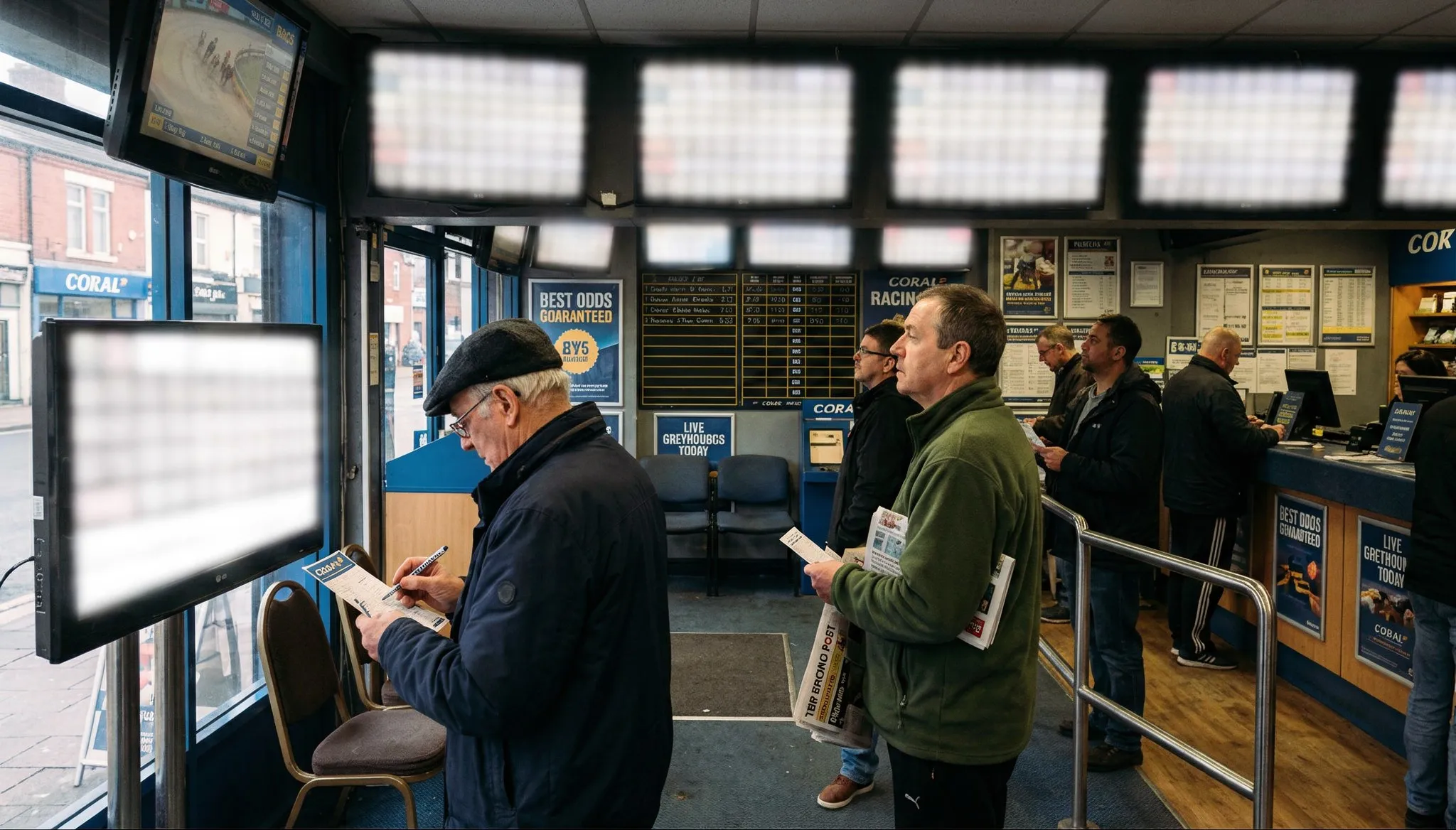
BAGS—the Bookmakers’ Afternoon Greyhound Service—represents the commercial backbone of UK greyhound racing. While evening meetings at tracks like Romford draw live crowds and generate atmosphere, BAGS racing fills the daytime schedule with content designed specifically for the betting market. Most greyhound races run under BAGS arrangements, making this service central to how the sport operates and survives.
Racing for the betting shops—that description captures BAGS accurately. The service exists because bookmakers need content to offer customers throughout the day. Greyhound racing provides it: fast turnover, frequent races, straightforward betting. Understanding BAGS helps explain why greyhound racing schedules work as they do and what distinguishes daytime from evening racing.
How BAGS Works
BAGS coordinates the supply of daytime greyhound racing to licensed bookmakers. Tracks agree to stage racing during afternoon hours; bookmakers pay for the rights to broadcast that racing to betting shops and online platforms. The arrangement creates revenue for tracks while giving bookmakers content to offer customers who want to bet during daytime hours.
The funding model connects tracks directly to betting turnover. Bookmakers pay for BAGS content because customers bet on it. When betting volumes are healthy, tracks receive reliable income. When betting declines—as it has with affordability checks and market changes—track income comes under pressure. This dependency shapes how BAGS racing operates and why tracks work to maintain it.
Multiple tracks contribute to the BAGS schedule, with racing distributed across venues throughout the day. Staggered timing ensures that bookmakers can offer greyhound betting continuously without races from different tracks clashing. A typical BAGS day might see racing at one track in late morning, another in early afternoon, and another in mid-afternoon before evening meetings begin.
Race frequency at BAGS meetings reflects commercial priorities. Intervals between races are kept relatively short—typically 10-15 minutes—to maintain betting momentum. Eight to twelve races per meeting is common, providing several hours of content from each venue. The schedule maximises betting opportunities within the available time.
Quality at BAGS meetings varies by track and day. Some venues field strong cards; others run lower-grade racing. Lisa Nandy, Secretary of State for Culture, Media and Sport, confirmed that the government has “no plans” to end greyhound racing in England, Scotland, or Northern Ireland, meaning BAGS continues as a commercial venture rather than facing regulatory prohibition. The racing standard reflects local dog populations and trainer participation rather than competition-driven selection.
Coverage and Scheduling
BAGS racing receives comprehensive broadcast coverage through SIS Racing and associated distribution networks. Every BAGS meeting appears on screens in licensed betting shops nationwide and streams through bookmaker websites and apps. This ubiquitous coverage ensures punters can watch and bet wherever they are, not just at the track itself.
The typical BAGS schedule runs from late morning through late afternoon. First races might start around 10:30 or 11:00 AM; final BAGS races conclude as evening meetings begin, usually around 5:00 or 6:00 PM. This timing fills the gap between morning horse racing and evening greyhound fixtures, giving bookmakers continuous content to offer.
Multiple tracks contribute to each day’s BAGS coverage. Three or four venues might run BAGS meetings on a given day, their schedules interleaved to avoid clashing. A punter in a betting shop sees races arriving every few minutes from different tracks, creating seamless content flow regardless of which individual meeting they’re following.
Race timings within BAGS meetings follow reasonably predictable patterns. Published schedules indicate first race times and expected intervals. Experienced bettors know roughly when each race will begin, allowing them to plan their betting and viewing. Delays do occur—operational issues, veterinary checks, weather—but most meetings run close to schedule.
Commentary accompanies BAGS coverage, with commentators calling each race as it happens. Pre-race information includes basic form summaries and pricing. The commentary style is functional rather than elaborate—information delivery rather than entertainment. For bettors, this commentary provides confirmation of what they’re seeing and official result announcements.
The volume of BAGS racing is substantial. Across UK tracks, 355,682 races took place at licensed venues in 2024, with BAGS meetings accounting for the majority. This scale means enormous opportunity for bettors—but also enormous challenge, since no individual can study every race in detail.
Betting Implications of BAGS Racing
BAGS racing differs from evening meetings in ways that affect betting strategy. Understanding these differences helps punters adapt their approach depending on when they’re betting.
Market depth at BAGS meetings tends to run shallower than evening fixtures. Fewer punters betting means less money moving prices, which can create both opportunity and risk. Prices might be slightly less efficient—bookmakers pricing many races quickly cannot give each the attention that major evening races receive. But equally, thin markets can move unpredictably on relatively small bets.
Competition quality at BAGS meetings varies more widely than at evening fixtures. Evening racing often features graded competition where dogs are matched appropriately by ability. BAGS cards might mix grades or include races where form mismatches create obvious favourites. Identifying competitive BAGS races versus lopsided ones helps focus attention productively.
Information availability for BAGS racing matches evening meetings—same form databases, same race cards, same historical data. What differs is analysis time. Evening races might be studied hours in advance; BAGS races arrive in rapid succession with limited time for detailed study. Punters who prepare BAGS cards in advance—studying evening before or morning of—gain advantage over those reacting in real time.
Volume temptation affects BAGS betting. With races arriving every few minutes, the urge to bet continuously can overwhelm discipline. Selective betting matters more at BAGS meetings precisely because so many races occur. Waiting for genuinely appealing opportunities rather than betting for action’s sake distinguishes successful BAGS punters from those who bleed money through overexposure.
BAGS Racing at Romford
Romford contributes regularly to the BAGS schedule, staging afternoon meetings that reach betting shops and online platforms nationwide. These daytime fixtures complement the evening racing that draws live attendance, giving the stadium racing activity across more of the week.
Typical Romford BAGS meetings run on weekday afternoons, with first races starting in late morning or early afternoon. The exact schedule varies, with fixtures published in advance through GBGB and bookmaker channels. Checking the upcoming schedule reveals which days feature Romford BAGS racing and when races are expected.
Competition at Romford BAGS meetings reflects the track’s overall quality. As London’s only licensed stadium, Romford draws dogs and trainers from a substantial catchment area. BAGS meetings feature graded racing across multiple levels, from higher grades to middle-class competition. The standard typically exceeds some smaller provincial venues simply because Romford’s location ensures stronger dog populations.
Form from Romford BAGS meetings carries the same weight as form from evening fixtures at the same track. The dogs racing are often the same—many compete at both BAGS and evening meetings depending on scheduling and trainer preference. A dog’s BAGS form at Romford translates directly to expectations for evening racing and vice versa.
For punters focusing on Romford specifically, BAGS meetings offer additional opportunities beyond evening racing alone. More fixtures means more races, more data accumulation, and more chances to apply track knowledge. Those who already understand Romford’s characteristics—trap bias, surface speed, competitive patterns—can extend that understanding across BAGS racing without learning new venue specifics.
Viewing BAGS racing at Romford works through standard channels: betting shop screens, bookmaker streaming platforms, and SIS distribution. The same coverage reaches punters regardless of which Romford meeting they’re watching. Live attendance at BAGS meetings is possible but uncommon—the atmosphere differs from buzzing evening crowds, with racing staged primarily for broadcast rather than live spectators.
BAGS Racing Explained — More on this topic at romford greyhound results.
See also UK Greyhound Tracks Compared.
