
Best Greyhound Betting Sites – Bet on Greyhounds in 2026
Loading...
The greyhound grading system exists to create competitive racing. Without classification, superior dogs would simply dominate weaker fields, producing predictable results and meaningless competition. Grades sort dogs by demonstrated ability, ensuring that races bring together runners of comparable quality.
For bettors, understanding grades unlocks essential context. A dog winning at B3 grade faces different competition than one winning at A1. Grade changes—promotions and relegations—create value opportunities that surface-level form analysis misses. Class tells in greyhound racing, and the grading system formalises that class distinction. What follows breaks down how grades work, how dogs move between them, and what this means for practical betting decisions.
Understanding Grade Levels
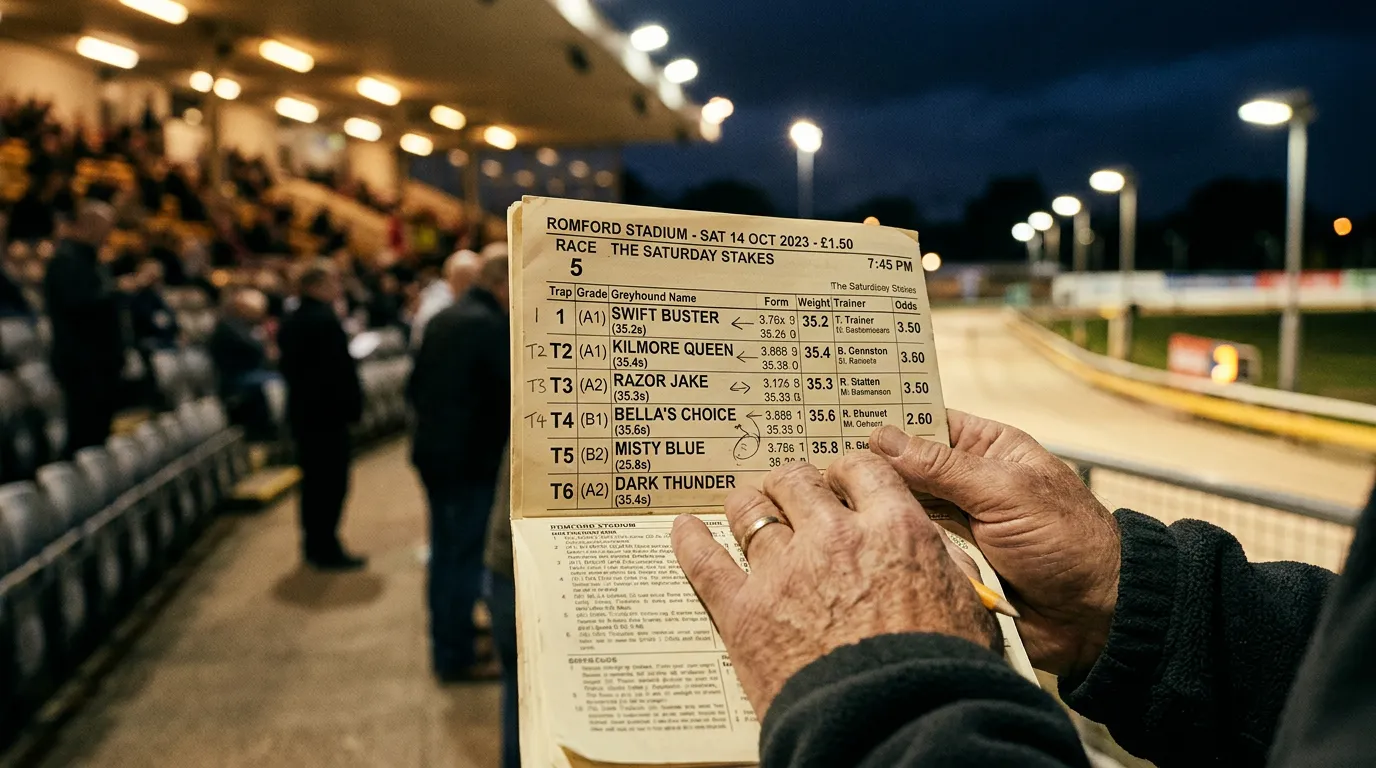
UK greyhound racing uses an alphabetical grading system overseen by the Greyhound Board of Great Britain. The hierarchy runs from A grades at the top down through B, C, D, and beyond. Within each letter, numerical subdivisions create finer distinctions—A1 representing the elite, A2 slightly below, and so on.
A-grade races feature the fastest dogs at any given track. These are proven performers capable of track-record pace on their day. A1 and A2 represent the pinnacle of graded racing; dogs at this level possess both raw speed and the experience to deploy it consistently. Competition at A grade tends to be fierce, with small margins separating winners from losers.
B-grades contain dogs slightly below top class. Many B-graders once competed at A level and dropped back, while others are rising dogs yet to prove themselves against elite opposition. The depth of B-grade competition varies considerably—some B1 runners might beat average A2 dogs, while lower B grades blend into C territory.
C and D grades represent middle-class greyhound racing. These dogs lack the raw speed of higher grades but often provide excellent betting races. With less separation in ability, competitive races become more common, and the importance of trap draw, racing luck, and race shape increases relative to pure class.
Lower grades continue through the alphabet. Some tracks race E, F, and M grades (M denoting maiden—dogs yet to win). These are the nursery grounds for young dogs developing ability and the retirement home for older dogs whose speed has faded. The standard of racing varies widely, but for understanding race dynamics, these grades serve legitimate purposes.
Open races sit outside the graded structure entirely. These are elite events without grade restrictions, attracting the best dogs regardless of formal classification. Major competitions like stakes races run as opens, offering larger prizes but no grade implications for participants.
As Mark Bird, CEO of GBGB, has stated regarding the sport’s structure: “Proper regulation is the best approach to safeguarding the welfare of racing greyhounds, as well as maintaining the sport’s integrity and future prosperity.” The grading system forms a key part of that regulatory framework, ensuring competitive integrity at every level.
How Dogs Move Between Grades
The grading system operates dynamically. Dogs don’t remain fixed at one level; they move based on performance. Understanding these movements creates betting opportunities that static form analysis overlooks.
Promotion follows success. A dog winning consistently at their current grade will be moved up to face stronger opposition. The exact rules vary by track, but typically two or three wins within a defined period triggers promotion. This protects race competitiveness—a dog that has clearly outgrown their grade shouldn’t continue collecting easy victories against inferior rivals.
Relegation follows failure. Dogs that consistently finish out of the places at their current grade drop to face weaker competition. Again, specific rules vary, but repeated poor performances result in downgrading. This gives struggling dogs opportunity to regain confidence at a more suitable level rather than being perpetually overmatched.
The timing of grade changes matters critically for betting. A dog running their first race after promotion faces a step up in class. Their previous winning form came against weaker opposition; now they must prove themselves against better dogs. The market often overvalues recent wins without accounting for the grade jump.
Conversely, a freshly relegated dog drops to face inferior competition. If the relegation resulted from bad luck rather than genuine loss of ability—trouble in running, poor trap draws, unsuitable distances—the dog might prove far too good for their new grade. These are classic value situations: the dog’s recent losing form masks the reality that they’re entering an easier race.
Transfer between tracks adds another dimension. Grades are track-specific, meaning an A2 at one track might equate to B1 at another depending on the quality of local competition. Dogs switching tracks undergo reassessment, creating situations where their allocated grade misrepresents their true ability relative to the new competition base.
What Grades Mean for Betting
Grade analysis directly impacts betting strategy. The favourite win rate of 35.67% in 2024 varies significantly across grades, with higher grades typically showing slightly more predictable results due to smaller ability gaps between competitors.
Class drops represent one of the most reliable betting angles. A dog that raced competitively at A2 grade, picking up places without winning, drops to A3 following a run of seconds and thirds. This dog has demonstrated A2 ability; asking them to beat A3 dogs should prove straightforward. The market often focuses on recent results—the non-winning form—rather than the demonstrated ability level, creating overlays on dropped dogs.
Class rises deserve caution. A dog winning three consecutive B2 races earned promotion to B1. Those wins mean nothing against better dogs; the question becomes whether this dog possesses genuine B1 ability or simply dominated weak B2 competition. Backing recent winners stepping up in class often means paying for yesterday’s performance at tomorrow’s prices.
Grade-for-grade comparison helps identify value. When a dog that races regularly at B1 appears in a B2 race—perhaps due to availability or trainer preference for a particular meeting—they face inferior opposition despite the recent form suggesting nothing special. Understanding where dogs habitually race, not just where they’re racing today, reveals these mismatches.
Open races require different thinking entirely. With no grade restrictions, these events attract the best available dogs regardless of classification. Here, form comparison becomes paramount; grades tell you nothing when all competitors are graded A1 or exempt from normal classification. Prize money and prestige draw connections to enter their best dogs, making open-race fields more competitive than typical graded racing.
Grade Patterns at Romford
Romford operates a full range of grades, from top-class open races down through the standard alphabetical structure. As the only remaining licensed greyhound stadium in London, Romford attracts quality dogs from across the region, meaning its A-grade competition runs hot.
The track’s BAGS racing provides regular racing across multiple grades throughout the week. Afternoon meetings typically feature mid-range grades—B, C, and D—catering to the betting market that drives BAGS coverage. These meetings offer depth of competition without necessarily featuring elite performers.
Evening meetings at Romford often include higher-grade action. Special events and competitive races draw A-graders and open-race runners, while supporting races fill the card with various grades. Saturday evenings particularly tend toward stronger racing, with better dogs appearing for the feature events.
The concentration of London-area greyhounds at Romford following the closure of other regional tracks has increased competition across grades. Dogs that might have spread across multiple venues now compete at Romford, intensifying each grade’s depth. What once might have been a comfortable A3 runner at a weaker track now faces London’s best within each grade level.
For bettors analysing Romford form, grade context matters particularly at this venue. The strength of competition at each level means that grade changes carry genuine significance. A dog promoted at Romford faces a real step up; a dog relegated finds meaningful relief. Track-specific grade understanding serves Romford punters well precisely because the competitive depth validates the grading distinctions.