
Best Greyhound Betting Sites – Bet on Greyhounds in 2026
 Available in US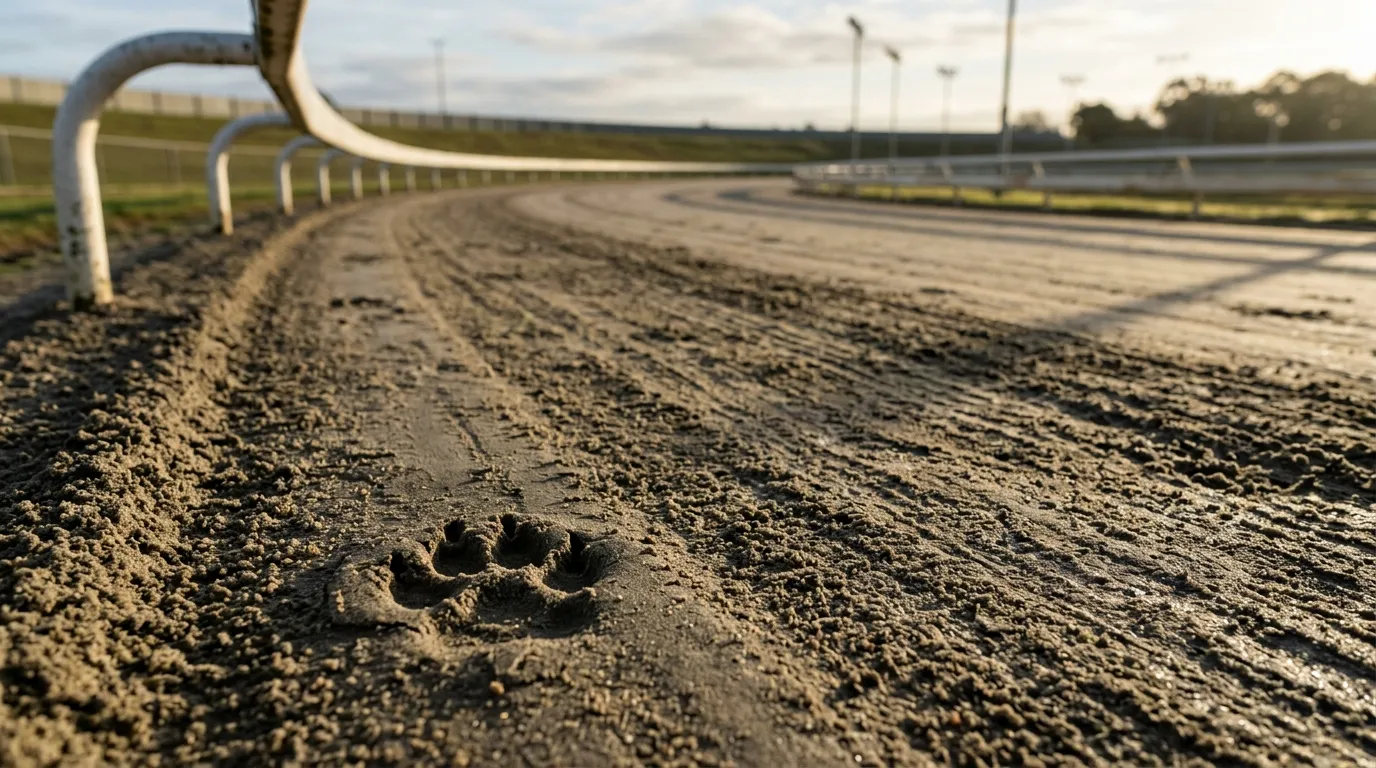
The surface beneath a greyhound’s paws determines more than most bettors realise. It affects times, influences injury risk, responds to weather, and varies subtly between tracks in ways that shape racing outcomes. The ground beneath is not a passive backdrop; it is an active participant in every race, rewarding some running styles while punishing others.
Modern greyhound racing takes place on carefully engineered sand surfaces. Gone are the grass tracks of the sport’s early decades; sand offers the consistency and drainage that professional racing requires. But not all sand is equal, and the way tracks prepare and maintain their surfaces creates differences that persist regardless of the dogs competing.
Understanding track surfaces adds another dimension to race analysis. The dog that dominates on one surface might struggle on another; the times that look impressive at one venue may prove ordinary elsewhere. This knowledge, systematically applied, identifies value invisible to bettors who treat all tracks as identical.
Surface Composition and Engineering
Track surfaces consist primarily of sand, but specification matters enormously. Particle size distribution—the mix of fine, medium, and coarse grains—affects how the surface compacts, how it drains, and how it responds to a greyhound’s stride. Too fine, and the sand lacks stability; too coarse, and it becomes abrasive. The optimal blend balances grip with cushioning, allowing dogs to accelerate explosively while protecting joints from excessive impact.
Underlying drainage systems prevent waterlogging during rain. Sophisticated tracks feature multiple layers beneath the racing surface: coarse aggregate for water movement, geotextile membranes to prevent mixing, and carefully graded sand on top. This engineering allows racing to continue in conditions that would make poorly-drained tracks unusable.
Depth of the racing surface matters as well. Shallow surfaces feel faster but offer less cushioning; deeper surfaces absorb impact better but can slow times marginally. Most tracks maintain their racing surface at depths determined through trial and experience, adjusted based on wear patterns and safety considerations. The precise specifications are proprietary, but the effects are observable in how dogs run.
Camber and gradient—the way the surface tilts on bends and straights—affects racing dynamics further. Inside rails may sit slightly lower than outside edges, or vice versa. These subtle angles influence how dogs take corners, whether inside or outside running lines offer advantages, and how the field spreads through bends. Tracks adjust these parameters, but the underlying geometry shapes racing styles in ways that persist across meetings and seasons.
Quality Monitoring and Standards
The GBGB takes surface quality seriously enough to employ specialist consultancy. According to official data, STRI—the Sports Turf Research Institute—conducted 80 visits to GBGB-licensed tracks during 2024. These assessments evaluate surface consistency, identify maintenance needs, and provide recommendations for improvement.
This level of monitoring reflects the direct relationship between surface quality and injury rates. Dogs running on poorly maintained surfaces face higher risks of muscle strains, toe injuries, and the more serious hock and wrist injuries that can end careers. Investment in surface quality is investment in animal welfare.
The Track Safety Committee Fund distributed £168,000 in 2024 specifically for safety improvements, much of it directed at surface maintenance and enhancement. This represents ongoing industry commitment to standards that were inconsistent in earlier eras of the sport.
As GBGB CEO Mark Bird has stated: “Proper regulation is the best approach to safeguarding the welfare of racing greyhounds, as well as maintaining the sport’s integrity and future prosperity.” Surface standards form a crucial component of this regulatory framework, connecting what happens beneath greyhounds’ paws to the broader governance structures that ensure fair and safe competition.
Weather Interaction and Track Conditions
Identical surfaces perform differently in varying weather. Rain softens tracks, slowing times and changing how dogs grip the surface. Dry periods can harden surfaces, producing faster times but potentially increasing concussive stress on joints. Temperature affects both the sand itself and the dogs running on it.
Track staff manage these variations through maintenance protocols. Watering during dry spells prevents surfaces from becoming too hard; rolling and grooming after rain restores optimal consistency. The timing and execution of this maintenance influences how races run on any given day. An afternoon meeting on a track watered that morning may run very differently from an evening fixture on the same surface after a full day’s racing.
Form students account for going conditions when interpreting times. A dog that recorded 23.50 over 400 metres on soft going might be credited with a faster adjusted time than one that clocked 23.40 on fast ground. These adjustments, applied consistently, reveal true ability beneath the raw numbers.
Seasonal patterns emerge as well. Winter racing often means softer going from regular rainfall and lower evaporation. Summer meetings tend to run faster absent irrigation. Dogs with known preferences for specific conditions gain advantages at predictable times of year, creating systematic betting opportunities for those paying attention to calendar patterns rather than merely current form.
Performance Implications
Some dogs simply run better on certain surfaces than others. Whether through physical build, running style, or training conditions, individual preferences emerge across careers. A dog whose times consistently improve at tracks known for softer surfaces probably has a genuine affinity; if the same pattern holds across seasons, it is unlikely coincidental.
Running style interacts with surface characteristics in predictable ways. Dogs that dig in hard with each stride may prefer firmer surfaces where their power translates directly to speed. Those with lighter, more flowing actions might excel on slightly softer going where excessive firmness jars their rhythm. Identifying which style a dog exhibits, then matching it to surface conditions, adds analytical depth beyond simple time comparison.
Track specialists develop partly through surface familiarity. A dog that trains and races regularly on one surface adapts to its characteristics. Moving to a track with different surface properties—finer sand, different depth, altered drainage patterns—requires adjustment. First-time visitors to any track face a learning curve that experienced campaigners have already navigated, contributing to the home-track advantage observable in statistics.
Trap draw interacts with surface properties. The inside rail at some tracks may compact differently than the middle of the racing surface; outside lines may encounter looser sand where fewer dogs run. These variations, subtle individually, compound with other factors to create the complex patterns that serious form students attempt to decode with varying degrees of success.
Injury patterns correlate with surface quality as the sport’s welfare statistics demonstrate. Poor surfaces produce more injuries; well-maintained surfaces reduce risk. For bettors, this creates indirect information: tracks with strong safety records likely maintain better surfaces, producing more reliable racing where form translates as expected. Tracks struggling with injury rates may have underlying surface issues that affect performance in unpredictable ways.
Romford’s surface, refined through the stadium’s £10 million 2019 renovation, represents modern standards in action. The track offers consistent racing conditions that have contributed to competitive times and, more importantly, safety records that reflect proper investment. Dogs racing here encounter a surface maintained to professional standards—one variable, at least, that bettors can trust to remain controlled.
Understanding surfaces will not tell you who wins every race, but it explains why form transfers imperfectly between venues, why times at one track cannot be compared directly to another, and why the same dog runs differently depending on when and where it competes. The ground beneath carries information; reading it accurately improves betting decisions across a season of racing.
Greyhound Track Surfaces — More on this topic at romford greyhound results.
See also Greyhound Betting Apps.
