
Best Greyhound Betting Sites – Bet on Greyhounds in 2026
 Available in US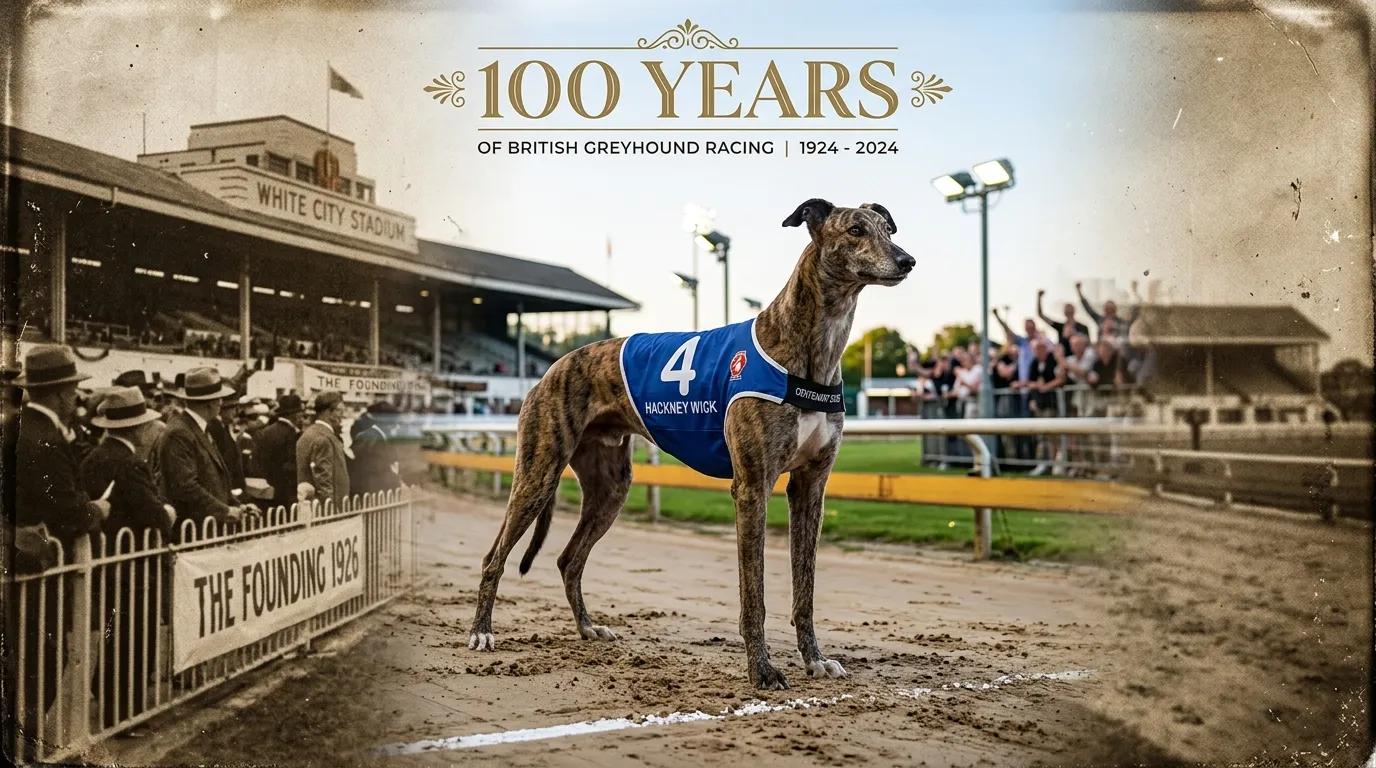
On 24 July 2026, greyhound racing in the United Kingdom marks its centenary. One hundred years since dogs first chased a mechanical hare around an oval track in Manchester, the sport that emerged from that moment continues—transformed, contracted, contested, but still running. A century of the dogs deserves acknowledgement, even as the industry navigates an uncertain future.
The anniversary invites reflection on what greyhound racing has been, what it has become, and what it might yet be. The arc from post-war phenomenon to modern niche sport traces broader shifts in British leisure, gambling, and attitudes toward animals. Understanding that history illuminates the present.
The Founding Moment: Belle Vue, 24 July 1926
Modern greyhound racing began at Belle Vue Stadium in Manchester on a summer Saturday in 1926. The event drew an estimated 1,700 spectators who paid to watch greyhounds pursue an artificial lure around an oval track—a format borrowed from American experiments and adapted for British conditions. What they witnessed was not merely a new sport but the birth of an industry that would reshape working-class leisure for decades.
The American influence was direct and acknowledged. Owen Patrick Smith, an American, had developed the mechanical lure that made organised track racing viable. Unlike coursing, where dogs pursued live hares across open country, track racing offered predictable entertainment in contained venues accessible to urban populations. The transfer of this concept to Britain required entrepreneurs who saw its commercial potential and venues willing to host something novel.
Belle Vue already operated as an entertainment complex—amusement park, zoo, and venue for various attractions. Adding greyhound racing to this mix proved immediately successful. The crowds that attended that first meeting indicated appetite for what the sport offered: evening entertainment, betting opportunities, and spectacle accessible to ordinary people without the social pretensions of horse racing.
Within months of Belle Vue’s opening, tracks proliferated across Britain. Entrepreneurs recognised that the model scaled easily—stadiums could be built or converted in urban areas where populations concentrated, evening meetings suited working schedules, and the betting attracted customers in numbers that justified investment. By the end of 1926, greyhound racing had established footholds in multiple cities. By 1927, it was a national phenomenon.
According to historical records, the first race at Belle Vue was won by a dog named Mistley, wearing the blue jacket of trap two, winning by eight lengths in 25 seconds.
The Golden Era: Peak Popularity and Cultural Impact
The decades following the Second World War represented greyhound racing’s zenith. Attendance figures reached heights that seem almost implausible from a modern perspective. In 1946, total attendance across British tracks exceeded 70 million—a figure that rivals contemporary football attendance despite competition from a less crowded entertainment landscape.
What drove such popularity? Several factors converged. Limited entertainment alternatives in austerity-era Britain made any accessible diversion welcome. Evening meetings suited working patterns, allowing people to attend after factory shifts ended. The tracks themselves served as social venues—places to meet friends, share a pint, and experience collective excitement around the races.
Betting anchored the appeal. Greyhound racing offered frequent racing and frequent results, creating a rhythm of anticipation and resolution that matched gambling psychology. Unlike horse racing, which concentrated events into daytime meetings often distant from urban centres, greyhound racing came to the people. A working man could attend his local track several evenings a week without significant travel or expense.
The cultural footprint extended beyond attendance. Greyhound racing entered popular consciousness through films, literature, and the shared experience of millions who had attended meetings at least occasionally. The phrase “going to the dogs” lost its solely pejorative meaning; for many, it simply described a night out.
Stars emerged—greyhounds whose names transcended the sport. Mick the Miller, who raced in the early 1930s, achieved celebrity status remarkable for a dog. His victories, personality, and even a starring role in a film made him a household name. Later champions continued the tradition of canine celebrities whose exploits drew crowds and captured imaginations.
A Century of Evolution: From 77 Tracks to 18
The contraction of greyhound racing from its peak tells a story of changing Britain. At its height, the sport operated 77 licensed tracks across the country. Today, the GBGB oversees just 18. That decline—more than three-quarters of venues lost—reflects forces beyond the sport’s control and decisions made within it.
Television transformed entertainment options from the 1950s onward. Where once attending a local track offered one of few evening diversions, competing attractions multiplied. Cinemas, later home video, eventually digital entertainment all drew attention that might otherwise have gone to the dogs. Each new option fractionally eroded the audience that sustained neighbourhood tracks.
Land values devastated the stadium network. Greyhound tracks occupied valuable urban sites—land that developers coveted for housing, retail, or office development. Stadium owners facing declining attendance and rising maintenance costs found selling to developers more attractive than continuing to race. Track closures accelerated from the 1980s onward as property values climbed and racing revenues stagnated.
Betting migration completed the transformation. The rise of betting shops shifted wagering away from tracks, and later online betting shifted it further still. Punters could bet on greyhound racing without attending—convenient for them, catastrophic for venues that depended on on-course attendance to sustain operations.
The 18 tracks that remain in 2026 have adapted to changed circumstances. Media rights payments from bookmakers who broadcast races through their platforms provide revenue independent of physical attendance. The survivors tend to occupy sites less attractive for alternative development or operate with sufficient efficiency to remain viable despite smaller crowds.
Romford exemplifies survival through investment. Its £10 million renovation in 2019 signalled commitment to continuing as London’s sole licensed track. Yet even successful adaptation cannot reverse the broader trajectory. The sport’s geographic footprint has contracted to a fraction of what it once covered.
Looking Forward: The Next Hundred Years
Will greyhound racing see a bicentenary? The honest answer is uncertain. The sport faces headwinds that show no sign of abating: continued venue pressure, welfare scrutiny, and the Welsh ban demonstrating that prohibition is politically achievable. Yet the industry has survived previous challenges that seemed existential at the time.
Sir Philip Davies, appointed Chair of GBGB in September 2025, offered an optimistic framing: licensed greyhound racing is a fantastic sport which has held an important place in the fabric of our country for almost a century, and the sport has a very bright future ahead. Such confidence may be necessary for leadership, though whether events will vindicate it remains to be seen.
The registered sector—distinct from unregulated flapping tracks—positions itself on welfare improvements as justification for continued operation. The 94% retirement success rate, declining injury rates, and significant funding for transition programmes represent genuine progress. Whether such improvements satisfy critics or merely demonstrate that even regulated racing remains problematic depends on one’s prior convictions about the ethics of animal sport.
For those who attend Romford or other surviving tracks, the centenary offers occasion to appreciate what exists while it exists. A century of the dogs produced genuine cultural impact, provided livelihoods for thousands, and created memories for millions who experienced race nights at least once in their lives. Whatever comes next, that history happened.
The greyhounds themselves remain oblivious to centenaries and debates. They run because instinct drives them to chase. The humans around them have spent a hundred years building structures to channel that instinct into sport, entertainment, and commerce. The next hundred years will test whether those structures endure—or whether the centenary marks not just a milestone but an approaching endpoint.
Greyhound Racing Centenary 2026 — More on this topic at romford greyhound results.
See also Reading Greyhound Results.
