
Best Greyhound Betting Sites – Bet on Greyhounds in 2026
Loading...
The question of when to bet on greyhounds—take the early price or wait for starting price—divides punters who otherwise agree on selection methods. Both approaches have advocates, both have merits, and the correct answer depends on circumstances rather than dogma. Timing is value when you get it right.
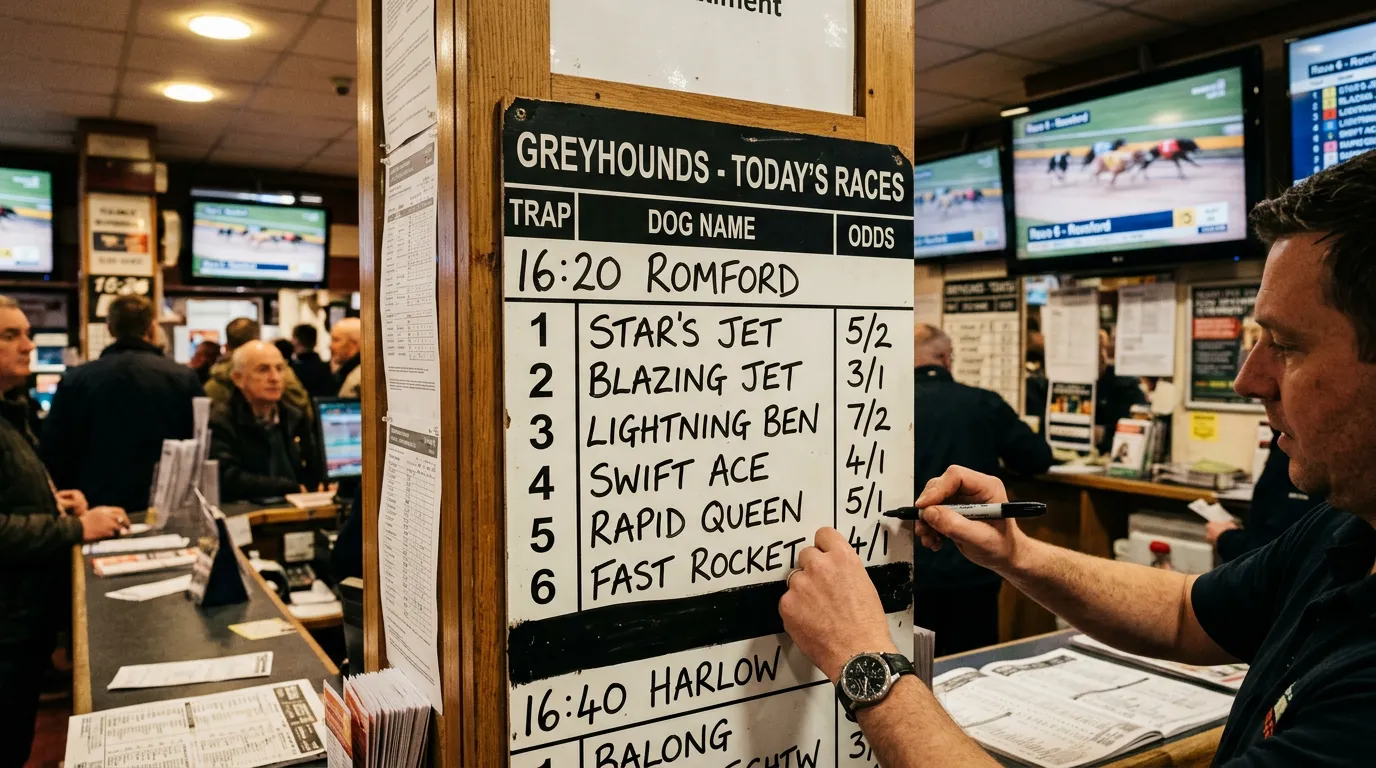
Early prices appear when bookmakers first open markets, typically the morning of race day for most greyhound meetings. Starting price reflects the odds available when the race begins, after all market movement has occurred. Between these points, money flows in, information surfaces, and prices shift. Understanding how this process works—and when each approach offers advantage—turns bet timing from guesswork into strategy.
How Starting Price Gets Determined
Starting price in greyhound racing follows a different mechanism than horse racing’s on-course betting pool. For most greyhound meetings, particularly BAGS racing that dominates the schedule, SP reflects a calculation based on the odds offered by major bookmakers at race start rather than traditional on-course market making.
The process works broadly as follows: independent assessors record prices from participating bookmakers in the moments before the race. The resulting SP represents these captured odds, providing a standardised return for bets taken at starting price. This system emerged because greyhound meetings rarely feature on-course betting activity sufficient to form traditional markets. The practical result: SP in greyhound racing closely tracks the prices available through online bookmakers.
Understanding this mechanism matters because it reveals what SP represents: not independent market judgement, but rather a snapshot of bookmaker pricing. If bookmakers collectively underestimate a dog, SP will be generous. If they overestimate, SP will be short. The accuracy of SP depends entirely on how well bookmakers priced the race—and bookmakers, while skilled, are not infallible.
For forecasts and tricasts, returns are calculated using the computer straight forecast method based on the SP of placed dogs. This means forecast payouts vary significantly depending on how the placed dogs were priced. Backing outsiders into the places generates larger returns than correctly predicting favourites to fill positions. The SP of each placed runner directly affects what you receive.
SP betting offers convenience: no need to secure prices early, no concern about odds shortening. You accept whatever price the market settles on. For casual bettors or those unable to monitor markets, this simplicity has genuine value. The question becomes whether that convenience costs you money compared to taking available prices earlier.
Finding Value in Early Prices
Early prices present opportunities when bookmakers misprice runners before the market corrects. The logic is straightforward: if you identify value that others will also spot, taking the early price locks in advantage before money moves the odds against you.
Classic early-value scenarios include dogs whose recent form understates their ability. A dog returning from absence whose last run showed nothing might open at bigger prices than warranted if their earlier form suggests better. Similarly, dogs stepping down in class after competitive efforts at higher grades sometimes open generously before punters recognise the opportunity. Early morning prices often reflect bookmaker assessment rather than market wisdom; taking positions before money flows creates advantage.
The risk with early prices involves information you lack. Trainers know more than punters about their dogs’ condition. A dog that looks like value in the morning might drift through the day as connected money stays away. Taking early prices means betting before all available information surfaces in the market. Sometimes you capture value; sometimes you bet into prices that are generous for reasons you’ll only understand after the race.
Systematic early-price betting requires discipline. Not every selection deserves early commitment—some should wait for market confirmation. The question for each selection: is the edge sufficient to justify betting before seeing how the market moves? Dogs with obvious form claims that the market will recognise deserve early backing. Dogs with speculative claims that might evaporate under market scrutiny often warrant patience.
Best-odds-guaranteed offers from major bookmakers reduce early-price risk. When available, these promotions pay the greater of the price taken or starting price. This removes the downside of backing a dog that subsequently drifts—you still receive SP if it exceeds your taken price. Early betting becomes less risky when the worst outcome is matching SP rather than being stuck with inferior odds.
Reading Market Movements
Between morning prices and the off, greyhound markets move as money arrives. Watching these movements provides information about how other punters assess each race—information that either confirms or challenges your own analysis.
Steamers—dogs whose prices shorten significantly through the day—attract attention. A dog opening at 6/1 that firms to 3/1 by race time has drawn substantial support. This could reflect shrewd punters recognising value, or it could reflect popular selections receiving public money. Distinguishing between informed and uninformed steam matters: the former suggests genuine edge, the latter merely market overreaction to obvious factors.
Drifters—dogs whose prices lengthen—tell opposite stories. A dog drifting from 3/1 to 5/1 has failed to attract support despite initial pricing. Sometimes this reflects information reaching the market: perhaps the dog showed poorly in paddock inspection, or connected money stayed away. Sometimes it simply means public money concentrated elsewhere, leaving one dog relatively unbacked. Drifters occasionally represent value when the lack of support is itself uninformed.
Stable markets, where prices change minimally, suggest bookmakers priced correctly and punters agree. These races offer less opportunity for those seeking market inefficiency. The lack of movement indicates rough consensus about relative chances—consensus that may or may not prove accurate but leaves little room for contrarian angles.
Market watching works best when combined with your own form analysis. If your selection steams, the market confirms your view—though your price may worsen. If your selection drifts, ask why: does the market know something you missed, or has it made an error you can exploit? Market movement adds data to your decision; it shouldn’t replace independent assessment but should inform it.
When SP Makes Sense
Starting price betting suits specific circumstances better than others. Understanding when SP serves your interests—versus when early prices offer clear advantage—sharpens your betting approach.
SP makes sense when you expect prices to lengthen. A dog you consider overbet by the public might open short and drift as money fails to sustain the early price. Taking SP captures the drift; taking early price locks in inferior odds. Identifying likely drifters requires reading the market well, but when you’re confident a selection will be bigger at the off, waiting makes sense.
Uncertain form situations often warrant SP. When you like a dog but can’t assess their chance precisely, waiting for market information adds data. A dog you rate somewhere between 3/1 and 6/1 might clarify through market movement. If it firms, perhaps you were overestimating; if it drifts, perhaps the market sees weakness you missed. SP lets the market inform your assessment.
Time constraints favour SP. Not everyone can monitor markets through the day. Punters who study form in the morning and cannot check prices before evening racing face a choice: take early prices and hope they hold, or accept SP and focus solely on selection. For those without time to manage positions actively, SP removes one variable from an already complex process.
The data on favourite performance provides context. With favourites winning approximately 35.67% of UK graded races in 2024, the market prices dogs with reasonable accuracy overall. SP reflects this collective market wisdom. Whether that wisdom serves you better than your own assessment depends entirely on whether you’re better at pricing greyhounds than the market consensus. Honest self-assessment matters: if you consistently identify value that the market misses, take early prices. If your selections tend to drift for good reason, perhaps SP serves you better.
Most successful punters use both approaches situationally. Strong convictions justify early positions. Marginal selections might warrant waiting. Likely steamers demand early action; likely drifters deserve patience. The rigid “always take SP” or “always take early” approaches sacrifice flexibility for simplicity. Matching your timing to each situation maximises overall results.