
Best Greyhound Betting Sites – Bet on Greyhounds in 2026
Loading...
Greyhound welfare UK has become the defining issue for the sport’s future. Every discussion about racing eventually turns to the dogs themselves: their safety during competition, their care throughout careers, and their lives after retirement. For bettors, enthusiasts, and critics alike, understanding the welfare landscape is essential, whether to engage with racing more thoughtfully or to form views about its legitimacy.
Jeremy Cooper, GBGB Chair and former CEO of the RSPCA, has stated: “As a former CEO of the RSPCA, I look at the existing welfare standards in greyhound racing and wish that these were in place for all dog owners in the UK.” This perspective from someone with significant animal welfare experience provides context for evaluating the industry’s current standards.
This article examines welfare through data rather than rhetoric. The GBGB publishes detailed injury and retirement statistics annually, providing a factual baseline for discussion. Critics present their own figures and arguments, which deserve consideration alongside the industry’s claims. The regulatory framework that governs licensed racing establishes legal minimums, while retirement programmes offer pathways for dogs leaving the track. Each element contributes to a complete picture that resists simple conclusions.
The stakes extend beyond abstract ethics. Real dogs experience the consequences of how racing operates, and real people make decisions based on their understanding of those consequences. Bettors may choose where and whether to wager based on welfare considerations. Potential adopters assess whether ex-racers make suitable pets. Policymakers weigh evidence when considering regulatory changes. None of these groups benefits from distorted information or incomplete analysis.
Beyond the finish line, greyhounds live as pets in thousands of UK homes. The transition from racer to companion shapes the breed’s public image and influences how people perceive the sport. Understanding this journey, including adoption processes and what ex-racers need from owners, matters for anyone considering welcoming a greyhound into their family. The welfare story continues long after the last race.
Injury Statistics
The GBGB’s 2024 injury and retirement data provides the most comprehensive picture of greyhound welfare at licensed tracks. According to this official report, UK licensed racing recorded 3,809 injuries across 355,682 races during 2024, producing an injury rate of 1.07%. This figure represents the lowest rate on record and continues a downward trend from previous years.
The headline injury rate requires context. Not all injuries are equal: a minor foot abrasion and a career-ending fracture both count as injuries, but their implications differ dramatically. The GBGB data distinguishes between injury categories, with serious injuries involving hocks and wrists occurring at rates of 0.17% to 0.21% according to historical DEFRA analysis. Most recorded injuries fall into less severe categories that do not prevent dogs from racing again.
Trackside fatalities present a different picture. In 2024, 123 greyhounds died at tracks, the highest figure since 2020. This number sits uncomfortably alongside the improved injury rate, raising questions about whether certain types of incidents have changed while others have worsened. The fatality rate of 0.03% represents half the rate from 2020, but the absolute number remains significant: over two dogs per week, on average, dying at licensed UK tracks.
Trend analysis since 2018 shows genuine improvement across most metrics. Injury rates have fallen, retirement success has improved, and the infrastructure for tracking outcomes has become more sophisticated. The GBGB presents this progress as evidence that sustained attention to welfare produces results. Critics argue that any injuries and deaths in a recreational betting context are unacceptable regardless of percentage improvements.
Injury types vary by cause. Collisions at bends, particularly the crowded first bend, account for some incidents. Track surface conditions affect soft tissue injuries. Kennel care influences overall dog fitness and recovery capacity. The multifactorial nature of racing injuries means no single intervention eliminates risk entirely, but cumulative improvements across track safety, surfaces, veterinary care, and training practices contribute to the improving statistics.
Interpreting the data requires honesty about its limitations. The GBGB tracks injuries at licensed meetings, but unlicensed racing exists outside this system with no equivalent reporting. Dogs that leave licensed racing injured may face varying outcomes depending on trainer resources and decisions. The statistics capture what happens at regulated tracks but not the complete lifecycle of every racing greyhound.
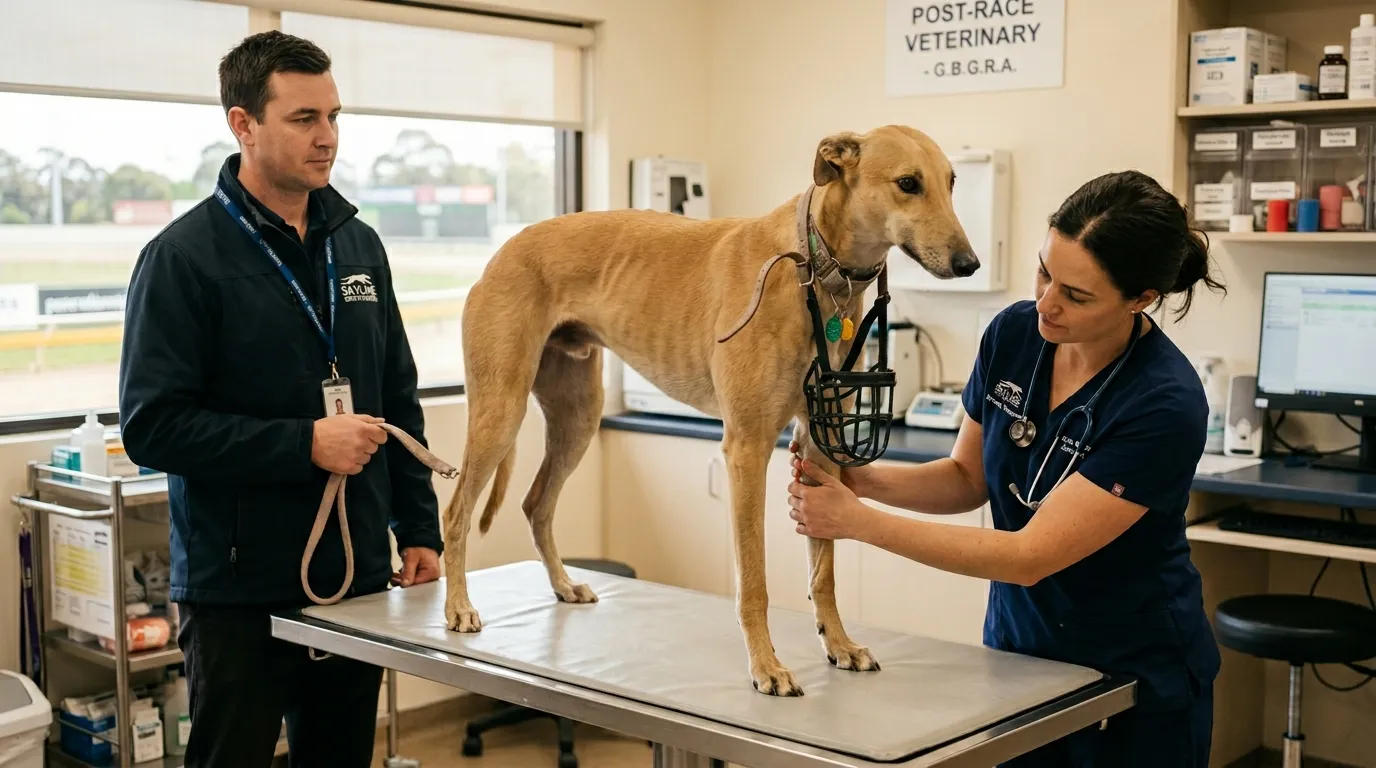
Veterinary presence at every licensed meeting provides immediate response to injuries when they occur. This requirement, mandated by the 2010 regulations, means injured dogs receive professional assessment within minutes rather than waiting for external veterinary care. The quality of this immediate response affects outcomes: prompt treatment can prevent complications and improve recovery prospects for injuries that might otherwise worsen.
Comparison with other dog activities provides perspective, though not necessarily justification. Dogs participating in agility, flyball, and other canine sports also face injury risks. Working dogs in police, military, and search-and-rescue roles experience incidents that do not generate equivalent public concern. These comparisons neither excuse racing injuries nor eliminate legitimate welfare concerns, but they contextualise the risks within broader patterns of human-dog activities involving physical exertion.
Retirement Programmes
What happens to greyhounds when racing ends determines much of the sport’s welfare standing. The GBGB reports that 94% of greyhounds successfully transition to retirement, up from 88% in 2018. This improvement reflects structured programmes, financial incentives, and changed expectations about trainer responsibility for their dogs’ futures.
The Greyhound Retirement Scheme has paid more than £5.6 million since 2020 to support dogs leaving racing. This fund provides financial assistance to trainers rehoming dogs, covering costs that might otherwise create barriers to responsible retirement. By making retirement economically viable, the scheme removes pressure that previously led to worse outcomes for dogs that could no longer race competitively.
The Injury Retirement Scheme, established in December 2018, has distributed nearly £1.5 million to support dogs forced out of racing by injuries. These dogs face additional challenges: recovery from injuries, potential ongoing care needs, and sometimes reduced adoption appeal. The IRS addresses these difficulties by funding veterinary treatment and providing payments that incentivise proper care even when a dog’s racing value has ended.
Economic euthanasia, killing healthy dogs because their racing value does not justify keeping them, has collapsed as a practice. In 2018, 175 greyhounds were euthanised for economic reasons. By 2024, that number had fallen to just three, a 98% reduction. This dramatic change reflects both the financial support from retirement schemes and a cultural shift within racing that no longer accepts economic culling as normal practice.
Jeremy Cooper, Chair of GBGB from 2018 until 2025 and former Chief Executive of the RSPCA, has overseen much of this welfare transformation. “When I joined GBGB as Chair in 2018 shortly after the launch of the Greyhound Commitment, I was clear the sport needed to achieve significant improvements in welfare,” he stated. His background in animal welfare brought external credibility and expectations that shaped the sport’s approach during his tenure.
Adoption grew 37% in the first half of 2025, indicating strong public interest in ex-racing greyhounds as pets. The breed’s temperament, once trained primarily for chase, adapts well to home life. Rehoming organisations, covered in detail later, work to match dogs with appropriate families and support successful transitions from kennel to couch.
The retirement system has gaps. Dogs that leave racing early due to insufficient talent or trainer decisions face different pathways than those retiring after full careers. Puppies that never reach racing fitness may not trigger the same schemes as adult retirees. The 94% success rate is measured against dogs entering the tracking system, but some dogs never reach that point. These edge cases complicate the otherwise improving picture.
The Welfare Debate
Critics of greyhound racing present statistics that paint a different picture from industry reports. According to data compiled by the Cut the Chase Coalition and reported in Dogs Today Magazine, 4,034 greyhounds have died since 2017 as a result of racing, with more than 35,000 injuries recorded over the same period. These cumulative figures emphasise the ongoing toll rather than percentage improvements.
The Cut the Chase Coalition, a grouping of animal welfare organisations, argues that racing is fundamentally incompatible with greyhound welfare. “Racing is inherently dangerous for the dogs involved, and rising fatalities proves this. Each and every life matters, and to think 1,100 have lost their lives in trackside fatalities since 2018 is heartbreaking,” a coalition spokesperson stated. This position holds that no level of injury or death is acceptable for an activity that exists primarily for human entertainment and gambling.
The debate exposes genuine philosophical disagreement. The GBGB measures progress against past performance: fewer injuries, better retirement rates, reduced euthanasia. Critics measure against a zero-harm standard that regulated racing cannot meet. Both sides can honestly claim their statistics support their positions because they are answering different questions.
Wales’s ban on greyhound racing reflects political response to animal welfare concerns. According to Senedd Research, the Prohibition of Greyhound Racing (Wales) Bill will come into force no earlier than 1 April 2027 and no later than 1 April 2030. The Welsh government concluded that welfare risks could not be adequately managed within racing structures, opting for prohibition rather than continued regulation. This decision will close the single licensed track in Wales and represents the most significant legislative intervention in British greyhound racing’s history.
Other organisations maintain more nuanced positions. Some accept that racing creates risks but believe proper regulation can manage them to acceptable levels. Others focus on specific reforms rather than outright bans, pushing for higher standards that might make racing more defensible without ending it entirely. The welfare landscape includes gradations of opinion beyond simple support or opposition.
For bettors and enthusiasts, the debate creates uncomfortable tensions. Enjoying racing while acknowledging its costs to dogs requires either accepting those costs as worthwhile or believing the industry’s improvement trajectory will eventually resolve the problem. Those unable to make either accommodation may find their relationship with the sport untenable. The welfare question does not permit comfortable neutrality.
International context shapes the UK debate. Greyhound racing has been banned in numerous jurisdictions worldwide, including most of the United States where it was once widespread. Remaining strongholds face ongoing pressure from animal welfare movements that have achieved success elsewhere. The UK industry cannot ignore these precedents when arguing for its continued operation, as advocates point to international bans as evidence that ending racing is both achievable and increasingly normative.
The industry response emphasises what it characterises as uniquely stringent UK regulation. The GBGB argues that licensed racing in Britain operates under welfare standards without equivalent in other racing nations, making international comparisons misleading. Whether this argument succeeds depends partly on whether welfare improvements continue and partly on whether the public accepts that regulated harm is preferable to prohibition with uncertain consequences for dog welfare.
Regulatory Framework
The Welfare of Racing Greyhounds Regulations 2010 established the legal foundation for modern greyhound welfare in England. These DEFRA regulations require every licensed meeting to have a veterinary surgeon present, mandate minimum welfare standards for kennelling and transport, and create enforcement mechanisms through licensing requirements.
The GBGB operates as a UKAS-accredited regulator, a status held since 2010 that subjects its inspection and enforcement processes to independent audit. This accreditation means the GBGB’s regulatory activities meet nationally recognised standards for competence and consistency. Tracks that fail to meet requirements face licensing consequences, creating incentives for compliance that purely voluntary systems lack.
Routine kennel visits have increased significantly, with the GBGB reporting a 73% rise since 2022. These visits inspect conditions at residential kennels where greyhounds live between races, checking housing quality, feeding practices, exercise provision, and general care. The increased inspection frequency reflects both welfare priorities and improved regulatory capacity.
Track licensing involves ongoing requirements rather than one-time approval. Venues must maintain standards for surfaces, safety equipment, veterinary facilities, and operational procedures. The 80 STRI consultancy visits across licensed tracks in 2024 provided professional assessments of running conditions, with recommendations feeding into maintenance and improvement programmes.
Enforcement powers include warnings, fines, suspensions, and ultimately withdrawal of trainer licenses or track operating permits. The existence of these powers matters as much as their exercise: trainers and tracks that might otherwise cut corners face consequences that make compliance preferable to violation. Published disciplinary decisions create precedent and demonstrate that rules carry weight.
The regulatory framework applies only to GBGB-licensed racing. Independent tracks operating outside this system face no equivalent oversight, and the welfare conditions there remain largely unmonitored. Critics argue this creates a two-tier system where regulated racing bears scrutiny while unregulated venues escape attention. The distinction matters when evaluating claims about greyhound racing welfare: positive statistics from licensed tracks do not necessarily reflect conditions across all racing activity.
Future regulatory developments may include tighter requirements, extended coverage, or potential legislation following the Welsh ban. The sport’s regulatory standing depends on demonstrating that self-regulation produces acceptable outcomes without requiring government intervention. Each welfare failure creates pressure for external oversight, while sustained improvement supports the case for continued industry self-governance.
Adopting a Greyhound
Ex-racing greyhounds make distinctive pets that suit certain households extremely well. Their temperament, despite a lifetime of chase training, tends toward gentle companionship rather than hyperactivity. Understanding what adoption involves helps prospective owners prepare for lives with these remarkable dogs.
Multiple organisations facilitate greyhound adoption across the UK. The Retired Greyhound Trust, breed-specific rescues, and local shelters all place ex-racers with families. Each organisation has its own processes, including home checks, matching assessments, and post-adoption support. Fees vary but typically cover veterinary work, microchipping, and administrative costs rather than generating profit.
The adoption process begins with application and assessment. Organisations want to understand your living situation, work patterns, experience with dogs, and expectations. A home visit often follows, checking that your property suits a greyhound’s needs: secure fencing matters because chase instincts persist, while sleeping arrangements should accommodate a dog that appreciates comfort. The assessment is not designed to exclude but to ensure good matches between dogs and families.
New adopters should expect an adjustment period. Racing greyhounds have lived in kennels with structured routines, and domestic life presents unfamiliar challenges: stairs, glass doors, household noises, other pets. Most dogs adapt within weeks, but patience during the transition prevents problems that might seem like permanent issues. The first few months establish patterns that define the dog’s home life going forward.
Greyhound temperament surprises many first-time owners. These dogs are not high-energy athletes requiring hours of exercise daily. Most adult greyhounds are content with moderate walks and extended sleeping, earning them reputations as excellent apartment dogs despite their size. Their calm demeanour and low aggression levels make them suitable for households that might struggle with more demanding breeds.
Some ex-racers come with specific needs. Dental health often requires attention after racing careers. Skin condition reflects kennel life and may improve with home care. Behavioural quirks, particularly around small animals that trigger chase responses, need management and sometimes training. Adopters should discuss individual dog histories with rehoming organisations to understand what each placement requires.
The commitment lasts years, not months. Greyhounds typically live into their early teens, meaning adoption represents a decade-plus relationship. This longevity makes initial matching important: a dog that fits your lifestyle at adoption should continue to fit as circumstances evolve. Thinking through future changes, whether moves, family expansion, or work pattern shifts, helps prevent situations where dogs need re-homing after initial placements fail.
Support does not end at adoption. Most rehoming organisations offer ongoing advice, behaviour helplines, and sometimes networking with other greyhound owners. Online communities provide additional resources where experienced owners share knowledge about breed-specific needs. The investment that organisations make in successful placements continues after dogs leave their care because returned dogs strain resources and represent failed outcomes for everyone involved.
Greyhounds from racing carry no inherent behavioural problems beyond their training for chase. Aggression toward humans is remarkably rare in the breed. Separation anxiety, while possible, often resolves with patient acclimation to home routines. The challenges of greyhound ownership typically involve management of instincts rather than correction of negative behaviours developed through poor treatment. This distinction matters: these dogs are not damaged by racing, merely trained for a specific activity that differs from pet life.
Adopting a greyhound contributes to the welfare ecosystem. Every successful placement demonstrates that racing dogs have value beyond the track, supporting the case that the industry should invest in retirement rather than treating dogs as disposable. Adopters become part of the solution to welfare challenges, providing outcomes that justify the retirement schemes and rehoming networks that make greyhound racing more defensible than it might otherwise be.
Future Outlook
The GBGB’s welfare strategy continues to evolve as the sport responds to criticism and changing expectations. Recent leadership transition saw Sir Philip Davies appointed as Chair in September 2025, bringing political experience to a role previously held by an animal welfare background. The shift may signal changed priorities or simply different communication styles in pursuing similar goals.
The Welsh ban, which will take effect no sooner than 1 April 2027 and no later than 1 April 2030 according to the Senedd Research, creates both precedent and pressure. If Wales successfully ends greyhound racing without significant controversy, other nations within the UK may face similar campaigns. Conversely, if the ban produces unintended consequences, such as dogs moving to unregulated settings or welfare declining without industry oversight, the case for regulation over prohibition strengthens. The Welsh experiment will be watched closely.
Continued improvement in welfare metrics remains essential for the sport’s social licence. The current trajectory shows falling injury rates and improving retirement outcomes, but these trends must continue rather than plateau. Any reversal would provide ammunition for critics and potentially trigger political intervention in England similar to Wales. The burden of proof has shifted onto racing to demonstrate ongoing progress.
Technology may offer new welfare tools. Enhanced tracking of dogs throughout careers, improved veterinary monitoring, and better data analysis could identify welfare risks before they produce incidents. Investment in such systems reflects the industry’s recognition that prevention beats reaction, both for dogs’ wellbeing and for public perception.
Bettors who value welfare can exercise preferences through their choices. Betting at tracks with strong safety records, supporting operators that contribute to welfare funds, and engaging with the sport through awareness rather than ignorance represent ways to participate while acknowledging welfare concerns. The consumer relationship creates leverage that pure criticism lacks, giving welfare-minded participants influence over industry direction.
The welfare question will not be resolved definitively. Those who believe racing is inherently unacceptable will not be satisfied by improved statistics, while those who see acceptable risk levels will not abandon the sport over critics’ objections. What can change is the factual basis for discussion: better data, more transparent reporting, and honest engagement with both progress and continuing problems. The dogs deserve that much from everyone who claims to care about their welfare.